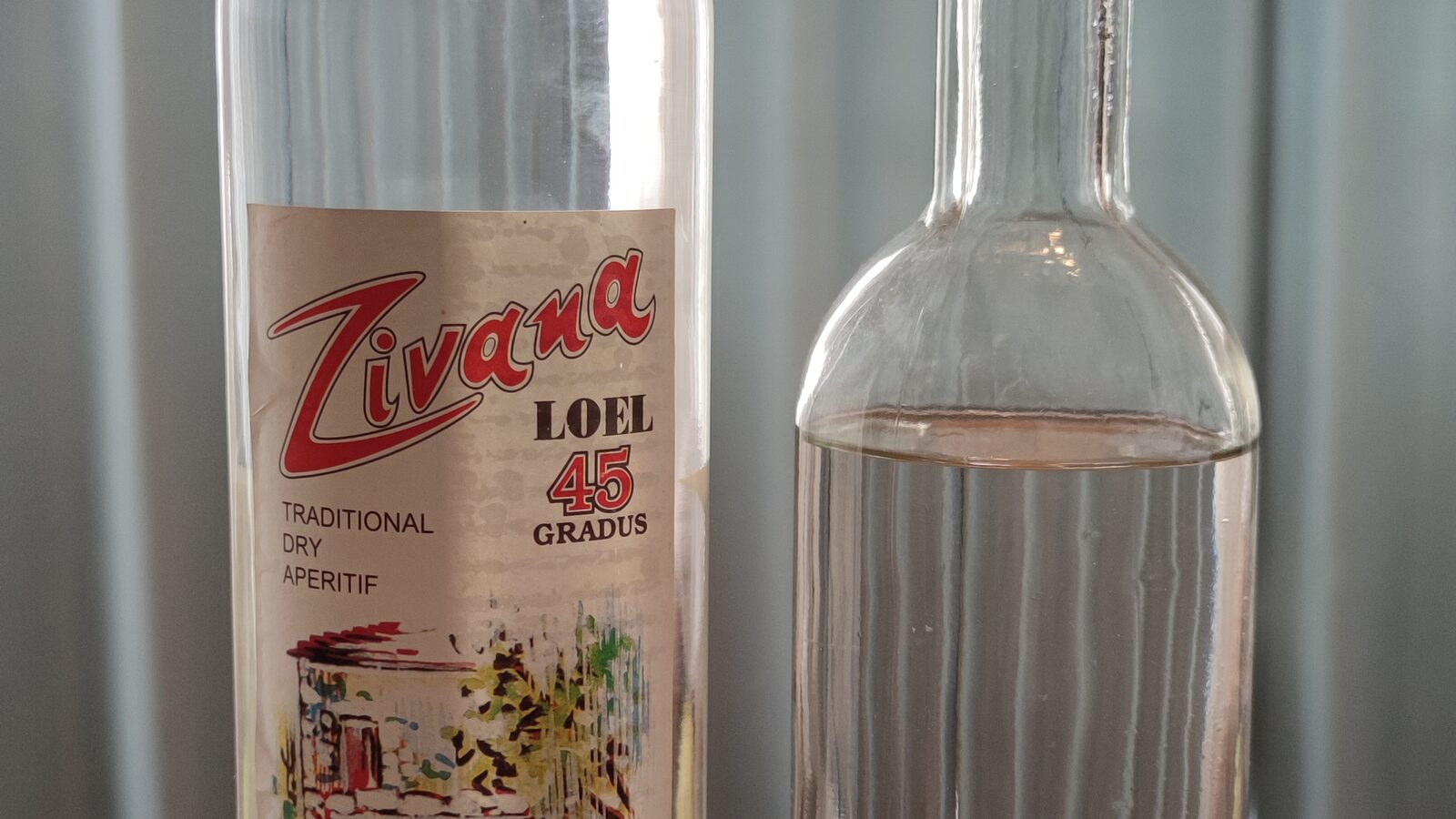
Sooner or later in Cyprus, someone will pour you a small glass of something completely clear, ice-cold, and stronger than almost anything else you have drunk that year. Refusing is technically possible but socially complicated. This is zivania, the island's traditional spirit, and it is less a drink than a social institution.
What it actually is
Zivania is a pomace brandy, a close cousin of Italian grappa and Cretan tsikoudia. It is distilled from zivana, the Cypriot Greek word for the mass of grape skins, seeds and stems left over after winemaking, combined with local dry wine made from the island's two workhorse grapes, Xynisteri and Mavro. Nothing is wasted: the vineyards make wine, and the leftovers make zivania. It comes off the still colourless, with a light aroma of raisins, and it is bottled strong. Most commercial zivania sits around 45 percent alcohol, with village-made versions often pushing higher.
The name is protected within the European Union, meaning zivania can only be produced in Cyprus, a recognition of just how tightly the spirit is bound to the island. Distilling here goes back centuries, with a long tradition of village stills in the Troodos wine country, where making the year's zivania after the grape harvest was as routine as making the wine itself.
The village medicine cabinet
What makes zivania interesting is not just how it is drunk but everything else it is used for. In the mountain villages it has traditionally served as a general-purpose remedy: rubbed on aching joints and sore muscles, applied to cuts, taken hot with honey for colds and sore throats, and relied on for warmth through the genuinely cold Troodos winters. Every village household kept a bottle, and most still do. Whether it cures anything is a question for doctors. That it makes you feel briefly invincible is not in dispute.
How it is served
Properly, zivania comes from the freezer. The bottle lives there permanently, and the spirit is poured ice-cold into small glasses, which softens the burn and sharpens the clean, grapey flavour. It is drunk neat, in sips, never in shots, despite what it looks like. And it almost never arrives alone: the traditional accompaniments are dried figs, walnuts, raisins and soutzoukos, the chewy grape-must and almond sweet you see hanging in strings at every market. Hard spirit, sweet dried fruit. The combination is very old and very correct.
Above all, zivania is the hospitality drink. Visit a village house, a mountain coffee shop, a small winery, sometimes even a monastery, and a glass appears in front of you before anyone has asked whether you want one. It is the island's way of saying you are welcome here. You do not have to finish it. You do have to touch it.
Trying it and taking it home
Every supermarket and village shop sells zivania, with the big island producers offering reliable bottlings for around ten euros and small Troodos distilleries selling more characterful versions. There is also red zivania, gently spiced with cinnamon, a speciality worth picking up if you see it. The wine villages of the Limassol and Paphos hills are the best hunting ground, and several wineries will let you taste before you buy, usually with a fig or a walnut alongside, because they know the rules too.
A word of respect: at 45 percent, zivania is roughly as strong as whisky and considerably easier to drink when frozen, which is exactly the trap. Sip it slowly, eat the dried fruit, and do not attempt to match an eighty-year-old village host glass for glass. They have been in training since before you were born, and they will win.
