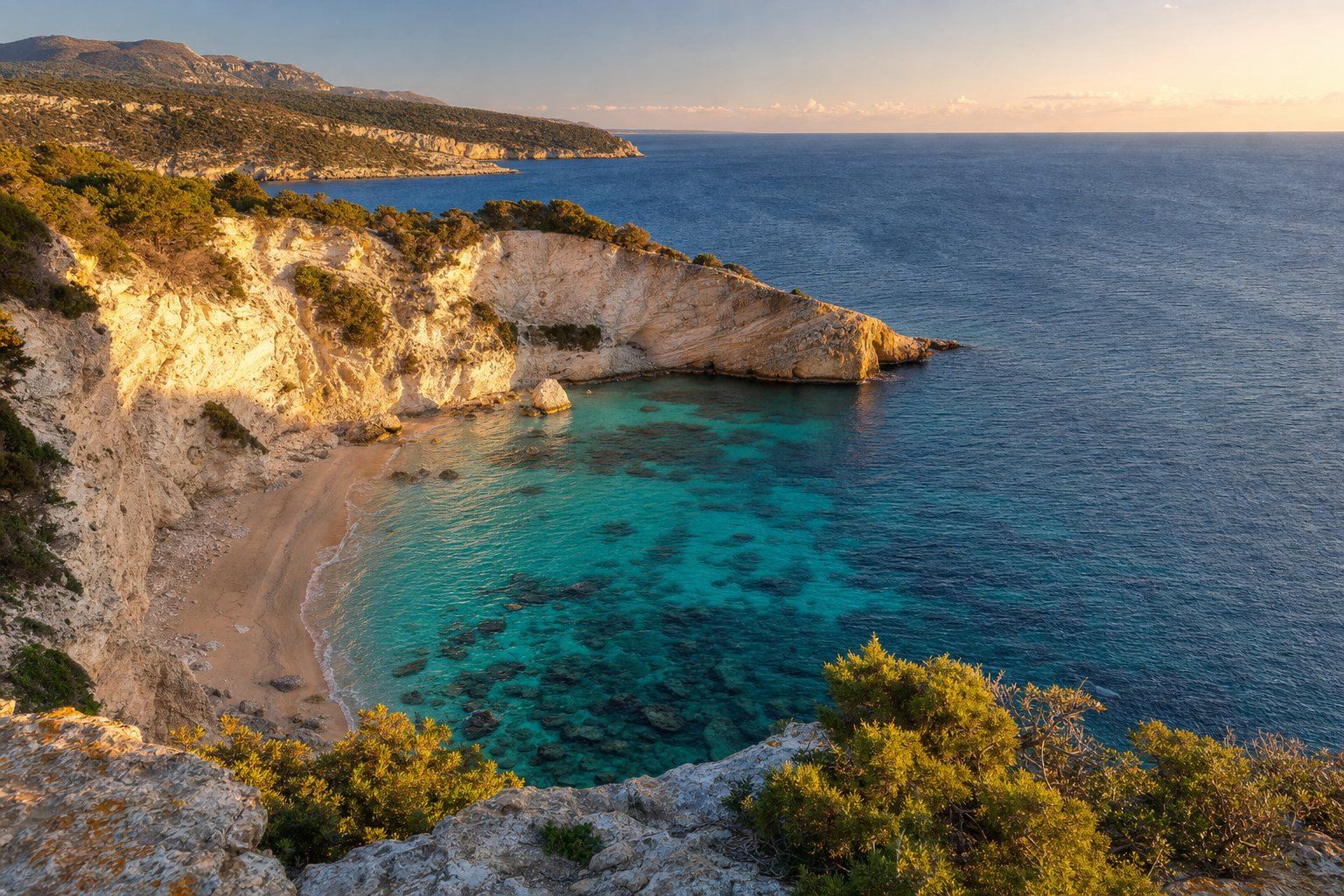
Moving to Cyprus
A new life in the sun, minus the paperwork panic.
Everything people fret about, residency, tax, banking, schools, healthcare, explained plainly. And when you want it done for you, we step in.
Everything people fret about, residency, tax, banking, schools, healthcare, explained plainly. And when you want it done for you, we step in.
Cyprus is an English-friendly, EU island with roughly 320 sunny days a year, low crime, a relaxed pace, and a cost of living below most of Western Europe. English is widely spoken, the legal system has British roots, and the tax regime is genuinely attractive, especially the non-domicile rules that exempt qualifying new residents from tax on dividends and interest for up to 17 years.
It works for retirees, remote workers, families and business owners alike. The catch is never the island. It's the admin: which permit, in what order, which office, which form. That's the part that turns a dream move into a headache, and the part we make disappear.

Here's the honest version of each. Rules change and every case differs, so treat this as your map, not legal advice. We confirm the detail for your exact situation.
Which route you take depends on your passport: EU citizens just register, UK citizens settled before 2021 are covered by the Brexit Withdrawal Agreement, and everyone else applies under non-EU routes. We work out the right one so you don't waste months on the wrong application.
Learn more & pricingThe main routes are the Yellow Slip (EU), the Pink Slip (non-EU temporary residence), Category F and residency by investment. Each has its own income proof and paperwork. We match you to the one that fits and handle the whole file.
Learn more & pricingThe first €22,000 of income is tax-free (raised from €19,500 in the 2026 tax reform), and non-dom residents pay no tax on dividends or interest for up to 17 years. No inheritance or wealth tax either. We connect you with trusted accountants to set it up properly.
Learn more & pricing See living costsYou'll need a local account for rent, bills and residency proof, but Cyprus banks run strict checks and it can drag on for newcomers. We make the introduction and prep your documents the bank's way, so it actually opens.
Learn more & pricingThere are free Greek-language public schools and excellent English-language private/international schools (fees up to ~€10,000+/year). The best fill up early. We shortlist by area and budget, get you on waiting lists, and sort the paperwork.
Learn more & pricing Schools & fees guideThe national health system (GeSY) gives affordable cover once you're contributing: personal doctor visits are free and prescriptions cost €1 each. UK pensioners may qualify for an S1 certificate for UK-funded access. We make sure you're registered correctly with no gap on arrival.
Read the full GeSY guideHow a tenancy works here, the buying steps, the 2026 transfer fees, the 5 percent VAT rule for a first home and how to check an agent is licensed.
Read the property guideWho can work without a permit, the 2026 minimum wage, what comes off a payslip, leave rules and where the jobs are actually advertised.
Read the working guideEmergency lines, tonight's pharmacy, hospitals, power and water faults, embassies and lost card lines, every one taken from the official page.
Keep the numbers pageThe figures that matter most, current as of the 2026 tax reform (in force 1 January 2026). Always confirm the latest with us or an official source before you act, because rules move.
The old citizenship-by-investment ("golden passport") scheme was scrapped in 2020 and has not returned; there is no route to a Cyprus passport by investment. We review these figures weekly against official sources.
We're on the ground in Cyprus, fluent in Greek, and we deal with the government offices directly so you don't have to. From a single permit to a full family relocation, tell us where you're at and we'll map the next step.

The PR rules got tightened in March and most blogs still have the old numbers. Quick honest update on income thresholds, property values and timelines.
Read
The investment threshold went up, the timeline got longer, and the political risk got worse. Here's what to do instead.
Read
A preserved old town, a rushing river and a UNESCO church in the pines.
ReadIt depends on your status. UK citizens who settled in Cyprus before 2021 are covered by the Brexit Withdrawal Agreement, while everyone else applies under the non-EU routes, such as the Pink Slip for temporary residence, Category F or residency by investment. EU citizens simply register. We work out the right route so you do not waste months on the wrong application.
The first €22,000 of income is tax-free, raised from €19,500 in the 2026 tax reform, and non-dom residents pay no tax on dividends or interest for up to 17 years. There is no inheritance tax and no wealth tax, and foreign pensions can be taxed at a flat 5% on amounts over €5,000 a year.
Yes. Permanent Residency by investment (Category 6.2) starts from €300,000 in property plus VAT, with secured annual income from abroad of €50,000, and more per dependant. It is a residence permit for life, not citizenship: the old golden passport scheme was scrapped in 2020 and has not returned.
Yes. The Digital Nomad Visa is for non-EU remote workers with a minimum net income of €3,500 a month. It is granted for an initial year and is renewable up to three.
Yes. The national health system, GeSY, gives affordable cover once you are contributing: personal doctor visits are free and prescriptions cost €1 each. UK pensioners may qualify for UK-funded access via an S1 certificate.
Yes. Alongside free Greek-language public schools there are excellent English-language private and international schools, with fees up to around €10,000 or more a year. The best ones fill up early, so get on the waiting lists as soon as you can.
Roughly 320 sunny days a year, low crime, a relaxed pace and a cost of living below most of Western Europe. English is widely spoken, the legal system has British roots and the tax regime is genuinely attractive, especially the non-dom rules.
