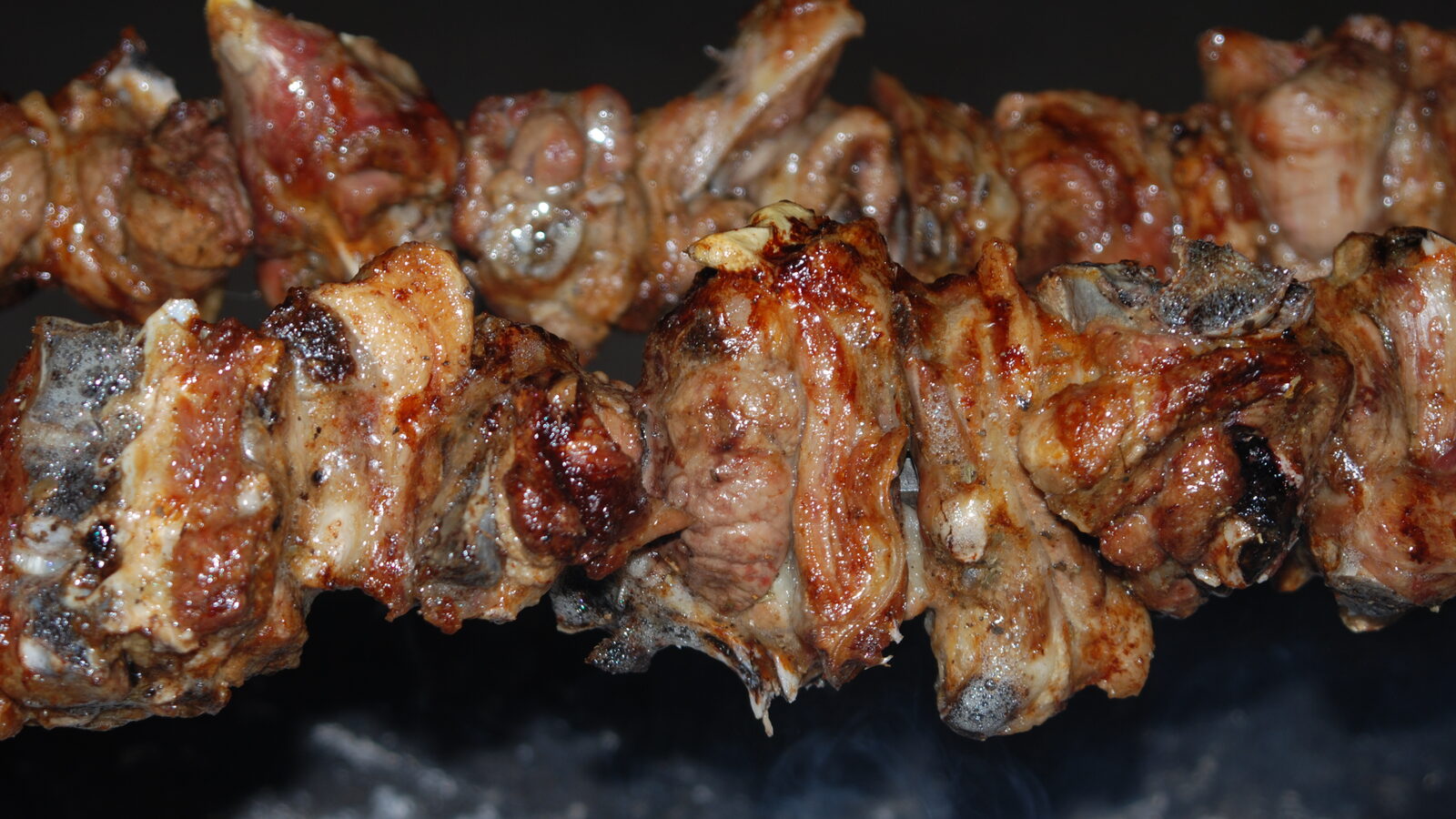
On any given Sunday in Cyprus, from about eleven in the morning, the whole island starts to smell the same. It is the smell of charcoal and slowly roasting meat drifting out of gardens, balconies and picnic sites, and it means one thing: souvla is on.
Souvla is the national weekend dish, and the first thing to understand is that it is not souvlaki. Souvlaki, the Greek staple, is small cubes of meat cooked fast over hot coals. Souvla is the opposite in almost every way: big chunks of meat, often the size of a fist, threaded onto long skewers and cooked slowly, at a distance from the coals, for a couple of hours. Souvlaki is a snack. Souvla is an event.
The foukou
The whole thing revolves around a piece of equipment every Cypriot household owns: the foukou. It is a long, deep charcoal barbecue with a rotisserie mechanism, usually motorised these days, that turns several long skewers at once. The skewers sit high above a bed of charcoal, so the meat cooks gently in its own rendering fat rather than scorching. You will see foukous in gardens, on apartment balconies, bolted into the backs of pickup trucks and set up at every beach and forest picnic area on the island. When Cypriots emigrate, the foukou goes with them.
The meat
Pork is the everyday choice, usually shoulder or neck, cut large and kept on the bone where possible because bone means flavour and moisture. Lamb, traditionally neck and shoulder, is the festival option. Chicken, typically thighs, is for the cautious and the children. Seasoning is a matter of fierce local debate, but the traditional position is minimalist: salt, maybe dried oregano, perhaps a squeeze of lemon at the end. The argument is that two hours over good charcoal is the seasoning.
The cooking itself follows a rhythm. The meat starts high above generous coals, turning slowly while the fat renders and the outside takes colour. As the coals fade, the skewers come down closer for the final crisping. The person in charge, and there is always exactly one person in charge, judges this entirely by eye and long experience, while everyone else present offers unsolicited advice. This is a formal part of the ritual.
Easter, the high holy day of souvla
Souvla peaks at Orthodox Easter. After the long Lenten fast, Easter Sunday is the biggest feast of the Cypriot year, and its centrepiece is souvla, traditionally lamb, cooking from mid-morning while the extended family gathers. Villages smell of charcoal from one end to the other. If you are ever invited to a Cypriot Easter, cancel whatever else you had planned.
What comes with it
Not much, and that is deliberate. Fresh bread to catch the juices, a village salad, some tzatziki or plain yoghurt, maybe chips for the kids, and lemon wedges. The meat is the point. It comes off the skewer onto a communal platter, someone shouts that it is ready, and it disappears with startling speed considering how long it took to cook.
Getting it as a visitor
Plenty of tavernas and psistaries (grill houses) serve souvla, and a good one is worth ordering: ask for pork souvla and expect a generous plate of charcoal-scented meat with bread and salad for somewhere in the region of fifteen euros. But taverna souvla, however good, is only half the experience. The real thing comes with the garden, the slow afternoon, the arguments about charcoal placement and the second helping you did not need. If a Cypriot invites you to a Sunday souvla, that is not a casual offer. That is the island showing you its best self. Say yes, arrive hungry, and do not make plans for the evening.
