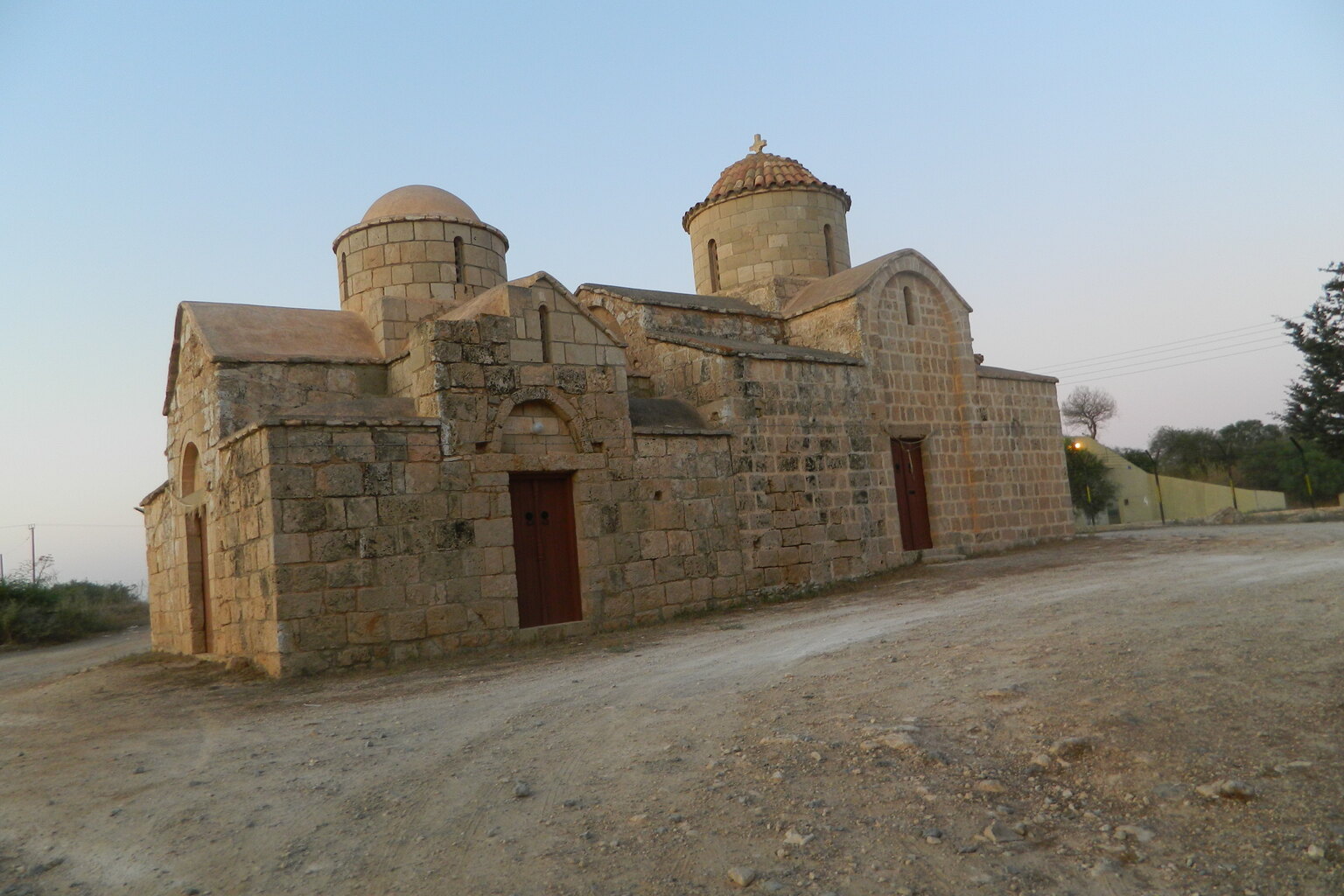
Sotira (Σωτήρα) is a large farming village in the free part of Famagusta district, about 6 km north-west of Ayia Napa as the crow flies and about 10 km, roughly 15 minutes, by road; Paralimni is about 4 km away. Since the local government reform took effect in July 2024 it has been one of the five municipal districts of the Ayia Napa municipality, with Ayia Napa, Liopetri, Avgorou and Achna; it had been a municipality in its own right since 2012, and with 5,905 residents at the 2021 census it is the most populous of the five. The name means Saviour and honours Christ: the main church is dedicated to the Transfiguration, and its feast on 6 August is the village's big festival.
Sotira is one of the Kokkinochoria, the red-soil villages of Famagusta district, known for potatoes, its main crop, for watermelons and pomegranates and, most famously, for kolokasi, the Cypriot name for taro. This is kolokasi country, and the crop is in season now.
Kolokasi Sotiras, the protected taro
Since 2016, Kolokasi Sotiras and Kolokasi-Poulles Sotiras have been an EU Protected Designation of Origin. The protected area is the red soil of four villages, Sotira, Avgorou, Frenaros and Liopetri, which the PDO file credits with more than 90% of the country's taro. One plant gives two products: the big central corm, the mappa, a cylinder 10 to 30 cm long that is sold as kolokasi, and the small curved side corms called poulles.
Two habits set it apart, according to the PDO file. Growers scrape every corm with a knife until it looks white, which is not done with taro grown elsewhere in Cyprus, and they leave ripe taro in the ground and dig up a little each day to match demand, which is why locals call it the farmer's "piggy bank". It is planted from February to April and harvested from July right through to the following May, so November is well inside the season. Kolokasi must always be cooked, because raw taro contains calcium oxalate; the classic local dish is kolokasi kapamas.
Taro came to Sotira at the start of the 20th century from the Karpas peninsula, in the occupied north since 1974, and was first grown on plots by the sea at Agia Thekla. Oral testimony collected for the PDO application says a Karpas farmer who married into Sotira brought the know-how. Growing spread gradually and intensified after 1974, when the taro fields of the north were lost.
The village celebrates its taro with the Pancyprian Kolokasi Festival. The 46th was held on Saturday 5 September 2026 at Sotira's municipal stadium, "returning after two years" in the organisers' words, with tastings of kolokasi dishes, children's workshops and games, and a concert; entry was €5 with the tastings included, and free for under-12s and disabled visitors. The next date has not been announced, and the Ayia Napa municipality lists its events on its website.
The Byzantine churches
West of the village, at Chortakia, about 2 km by road from Eleftheria Square, three Byzantine churches stand within a few hundred metres of each other. Agios Georgios, from the early 12th century, is a cross-in-square church with a dome, restored by the Department of Antiquities; the municipality's Byzantine Route points out charcoal drawings of ships that can still be made out on the south wall of its narthex. Agios Theodoros is a ruin whose narthex still stands, and Panagia Chordakiotissa, from the late 12th century, beside the village cemetery, is the surviving church of a monastery; the Byzantine Route notes the ruins of its cells and a well nearby.
In the village itself, the chapel of Agios Mamas, single-aisled with a dome and built in the early 16th century in the Franco-Byzantine style, keeps fragments of its 16th-century frescoes. The old Transfiguration church, known as Chrysosotiros, stands in the old cemetery near the village centre on the site of an early Christian basilica: researchers date its original core and its rare frescoes to the 13th century and its present shape to rebuilding in the 16th. In October 2026 the municipality said its conservation work had stalled.
Next to it, the chapel of Agios Georgios, not to be confused with the Chortakia church, houses Sotira's Ecclesiastical Museum: icons including a 15th-century Christ, old Gospel books, crosses and liturgical vessels. Visits are free and by appointment on +357 23 823 932. In July 2026 the municipality linked these chapels and churches as the Sotira Byzantine Route, with signs on site and an online 360° tour in Greek and English; the route gives no opening hours for the churches themselves.
Agia Thekla, on the coast
About 6 km south of the village (7 km by road), on the coast, the white chapel of Agia Thekla stands on the ruins of an early Christian basilica. Just west of it, a rock-cut tomb, probably late Roman, was turned into an underground chapel. The Great Cyprus Encyclopedia and the municipality both record that Agia Thekla was serving as a convent around 1937. Its feast on 24 September is one of the area's big religious fairs, and on Pentecost Monday, 21 June in 2027, a cross is thrown into the sea there and brought back by swimmers.
Agia Thekla beach, 300 m of sand inside a Natura 2000 protected area, flies the Blue Flag in 2026 and has lifeguards from April to October. Our guide to Ayia Napa's Blue Flag beaches covers the coast further east.
Getting there
By car, Sotira is about 10 km (15 minutes) from Ayia Napa, 4 km from Paralimni and about 54 km (45 minutes) from Larnaca Airport. By bus, OSEA routes 709 and 710 run between Ayia Napa and Sotira: in the timetable valid in November 2026 there are 11 a day from Ayia Napa, weekends included, and the ride takes about 25 to 30 minutes. A single ticket bought on board costs €2, or €3 from 21:00 to 04:00. Route 714 links Sotira with Larnaca town, though not the airport.
For a different kind of local produce, the Octo microbrewery in Sotira, which started out as Prime Microbrewery and now trades as Octopus, brews a fig-and-herb "Bronze Age" ale inspired by the excavation of a Bronze Age malting kiln at Kissonerga-Skalia near Paphos; its website lists booked brewery tours with tastings at €20 a person.
Before you go
Ring the Ecclesiastical Museum before setting off, since visits are by appointment, and check the municipality's events for the next Kolokasi Festival. If village life on this side of the island appeals, our relocation help is here when you need it.
