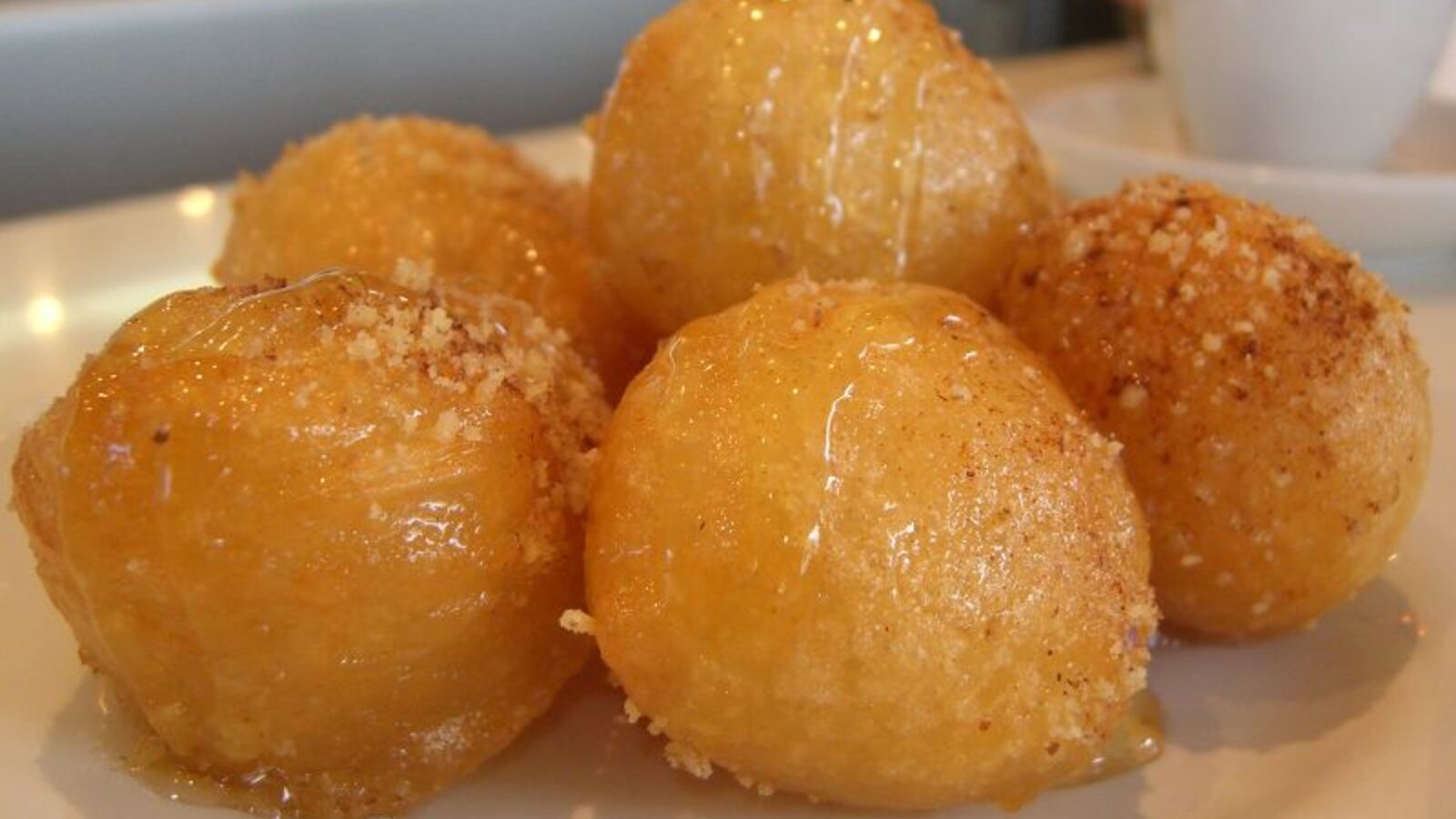
Every cuisine in the eastern Mediterranean has its version of fried dough soaked in syrup, and every one of them is convinced theirs is best. The Cypriot and Greek entry is loukoumades: little balls of yeasted batter, deep-fried until golden, then drenched in honey syrup and dusted with cinnamon. They are served hot, they are eaten fast, and they are one of the oldest sweets in continuous circulation anywhere.
An ancient habit
Fried dough with honey goes back a very long way in this part of the world. Honey-soaked fritters appear in ancient Greek sources, and they are often cited as one of the treats offered to victors at early athletic games. The exact ancient recipes are lost, but the idea, hot fried dough plus honey, has survived every empire that has passed through the region since. The Turkish lokma and the Arabic luqmat al-qadi are the same family; the name itself traces back to a word meaning morsel or mouthful, which is exactly what they are.
What makes a good one
The batter is simple: flour, water, yeast, a little salt. The technique is everything. The batter has to be loose and well-risen, scooped by hand or with a wet spoon straight into hot oil, where each dollop puffs into a ball. Done properly, a loukoumas comes out with a thin, crisp, deeply golden shell and an interior that is barely there, light, moist and almost molten. Straight from the oil they go into syrup, traditionally honey thinned with a little water, sometimes sugar syrup with honey added, and then a shower of cinnamon. Some vendors add crushed walnuts or a scatter of sesame seeds.
The failure modes are well known. Too dense means the batter was tight or under-proved. Greasy means the oil was too cool. Dry means they sat around, which is the cardinal sin: a loukoumas has a useful life of about five minutes, and the difference between one straight from the fryer and one that has waited a quarter of an hour is the difference between a small miracle and a sad sponge.
Where Cypriots eat them
The spiritual home of loukoumades in Cyprus is the panigiri, the village festival held for a church saint's day. Alongside the grilled meat and the loud music there is always a loukoumades stall, with batter being flicked into a huge vat of oil by someone who has clearly done it for forty years, and a queue of every generation of the village. Eating a paper plate of them, standing up, slightly burning your mouth, is a core Cypriot memory.
Outside festival season you will find them at fairs, seaside promenades and dedicated shops in the towns, where they are made to order. Modern places offer toppings that would scandalise a village grandmother, chocolate sauce, ice cream, crushed biscuits, and to be fair, some of those are excellent. But taste the classic honey and cinnamon version first, because that is the benchmark and it has earned its two thousand year run.
The practical bit
A portion is usually somewhere between ten and fifteen pieces and costs a few euros, which makes loukoumades one of the cheapest genuinely great things you can eat on the island. They are best in the evening, ideally after a dinner you already thought was too big, and they pair beautifully with a small strong coffee, which cuts through the syrup and gives you a fighting chance of stopping. Order one plate between two people, agree solemnly that you will only have a couple each, and then watch the plate empty in four minutes. This happens to everyone. There is no known defence, and honestly, nobody is looking for one.
