Every food culture has one pairing that sums up its summer. Italy has tomato and mozzarella. Spain has jamon and melon. Cyprus has halloumi and watermelon, and once you have eaten it on a beach in July with the temperature nudging forty degrees, you will understand why nobody on this island questions it.
The logic is simple. Halloumi is salty, firm and rich. Watermelon is cold, sweet and almost entirely water. Put them together and each one fixes the other: the fruit cools and rinses, the cheese seasons and satisfies. It is the same salt-and-sweet trick as salted caramel, except it was being served in Cypriot villages long before anyone put sea salt on a dessert menu.
The cheese itself
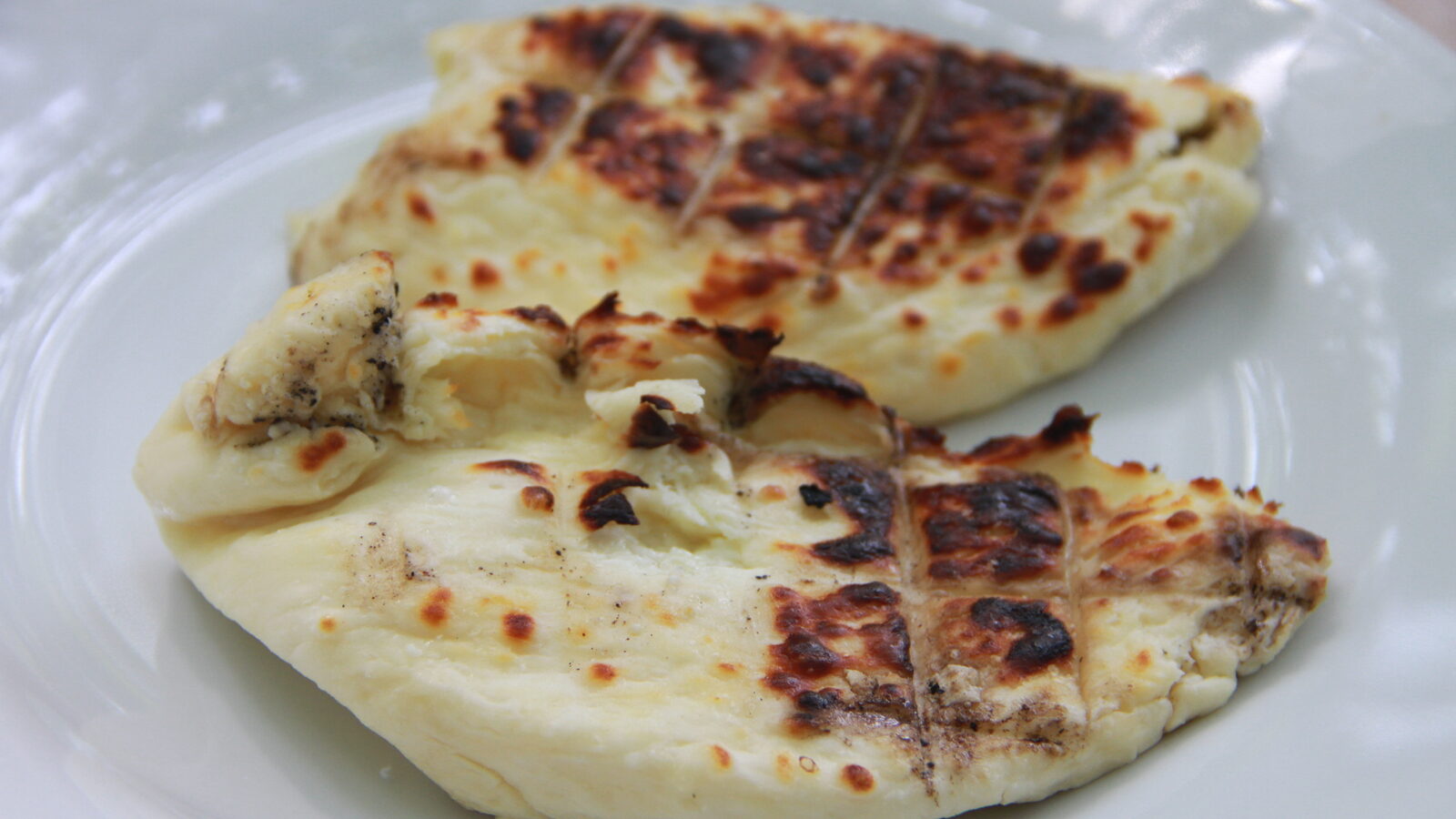
Halloumi is a semi-hard brined cheese with a texture unlike anything else: dense, springy and famously squeaky between the teeth. That squeak comes from its tight protein structure, which is also the reason it behaves so unusually in a pan. Halloumi has a very high melting point, so instead of collapsing into a puddle it browns, crisps and holds its shape. It is one of the few cheeses you can throw straight on a grill, which in a country where half of life happens around charcoal is not a small thing.
Traditionally it is made from sheep and goat milk, folded over into its distinctive shape with a few leaves of dried mint tucked inside. The mint is not decoration. It was originally a preservative, and it is now simply the taste of the real thing.
What PDO status means
In April 2021 the European Commission registered Halloumi (and its Turkish name, Hellim) as a Protected Designation of Origin. In plain terms: cheese sold as halloumi in the EU must be made in Cyprus, to a defined recipe. The registered specification allows cow's milk in the mix, but sheep and goat milk must be the dominant share. That matters because for years supermarket versions abroad quietly flipped the ratio, using mostly cheap cow's milk. The PDO was Cyprus taking its cheese back.
So when you buy halloumi here, look for the PDO mark, the folded shape and the flecks of mint. A block of it costs a few euros at any village shop, and the difference from the export imitations is not subtle. Proper halloumi tastes of the animal, in the best way: slightly tangy, properly salty, with that faint mint lift at the end.
How the pairing is actually eaten
Forget composed salads with rocket and balsamic glaze. The village version is a plate of cold watermelon slices with a slab of halloumi on the side, usually fresh rather than grilled, sometimes with a hunk of bread. You alternate bites. That is it. It turns up as a late lunch when it is too hot to cook, as the finish to a barbecue, and at the beach out of a cool box, where it might be the single best hot-weather food ever assembled.
If you want the slightly fancier version, grill the halloumi first. A minute or two per side in a dry pan or over coals until it is striped and golden, then straight onto the plate next to the cold fruit. The contrast of hot salty cheese and icy sweet melon is even louder that way.
When and where
Watermelon season in Cyprus runs through the heart of summer, roughly May to September, and the fruit here is grown in serious quantity, sweet and heavy. Any taverna will have both halves of the equation on the menu in July and August, and many will serve the pairing as a free finish to a meal, the same way they send out fruit after a meze.
But honestly, this is not restaurant food. Buy a whole watermelon from a roadside stall, a block of PDO halloumi from the nearest shop, and eat both somewhere with a sea view. Total cost, well under ten euros. It is the cheapest great meal on the island, and in the middle of a Cypriot heatwave it might be the only thing you actually want to eat.
