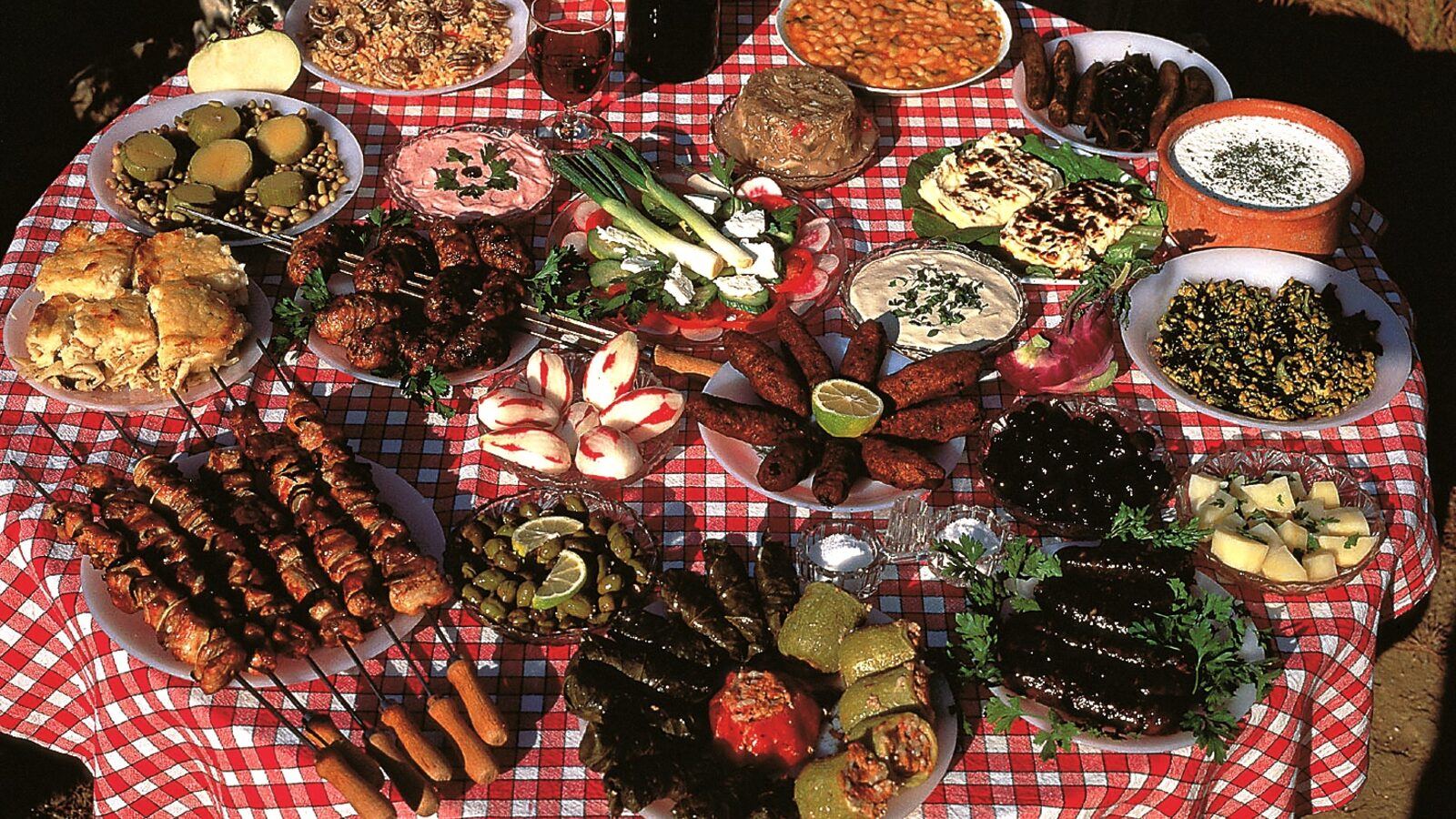
Order a meze in Cyprus and you have not ordered a dish. You have ordered an evening. The word comes from a Persian root meaning taste or snack, but the Cypriot version has drifted a long way from a snack: a proper meze runs to twenty or more plates, arrives in waves over a couple of hours, and is priced per person for the whole table. It is the island's national format for eating, and once you understand the rhythm of it, it is one of the best value meals in the Mediterranean.
The first rule: nobody chooses anything. You pick meat meze or fish meze, sometimes a mixed or halloumi-led vegetarian version, and then the kitchen decides. The plates that arrive are whatever the taverna does well that day. That is the point. A good meze is a portrait of the kitchen, not a list of your preferences.
The waves, in order
Every taverna has its own sequence, but the shape is broadly the same everywhere.
- Wave one: dips and salad. Warm bread, olives, a village salad, and the dips: tahini, taramosalata, tzatziki (called talattouri here, with extra mint), and hummus. This wave is a trap. It is delicious and it is designed to fill you up. Pace yourself.
- Wave two: the small hot things. Grilled halloumi, lountza (smoked pork loin), keftedes (herby meatballs), sheftalia (caul-wrapped sausage), maybe snails if the taverna is old-school, dolmades, and koupepia (stuffed vine leaves).
- Wave three: the mains parade. On a meat meze this is where souvla, pork chops, stifado or kleftiko start landing. On a fish meze expect whatever came in that morning: red mullet, sea bream, calamari, octopus off the grill.
- Wave four: the finish. Fruit, usually watermelon in summer, sometimes a small sweet, and often a complimentary shot of zivania or a glass of Commandaria to sign off.
How not to be beaten by course three
Everyone makes the same mistake once: they treat wave one like a normal starter and eat all of it. Then wave two arrives, then wave three, and by the time the kleftiko lands they are waving a white napkin. The locals' method is simple. Take a little of everything, leave food on the shared plates without guilt, and keep a slow, steady pace. A meze is a marathon run at walking speed. Skipping lunch beforehand is not a joke suggestion, it is standard practice.
It is also completely fine to ask the kitchen to pause or stop. Tavernas would rather slow the waves than watch food come back untouched. And do not order sides. There are no sides at a meze. The meze is the sides.
Meat or fish?
Inland and in the mountains, take the meat meze: charcoal, pork and lamb are what village tavernas do best. On the coast, especially at the fishing harbours around Zygi, Latchi and Ayia Napa, the fish meze is the move. A proper fish meze should taste of that morning's catch, so if a place offers an enormous fish meze at a suspiciously low price every single day, be a little sceptical about the freezer.
The practical bits
Expect to pay roughly 20 to 30 euros per person for a full meze, drinks on top, and most tavernas want a minimum of two people ordering it. Book ahead at the well-known places, particularly Sunday lunch, which is the island's big family meal of the week. Go hungry, go with time to spare, and go with people you like, because you are going to be at that table for a while. That, more than any individual dish, is what the meze is actually for. It is not a meal format. It is the island's way of making sure nobody rushes dinner.
