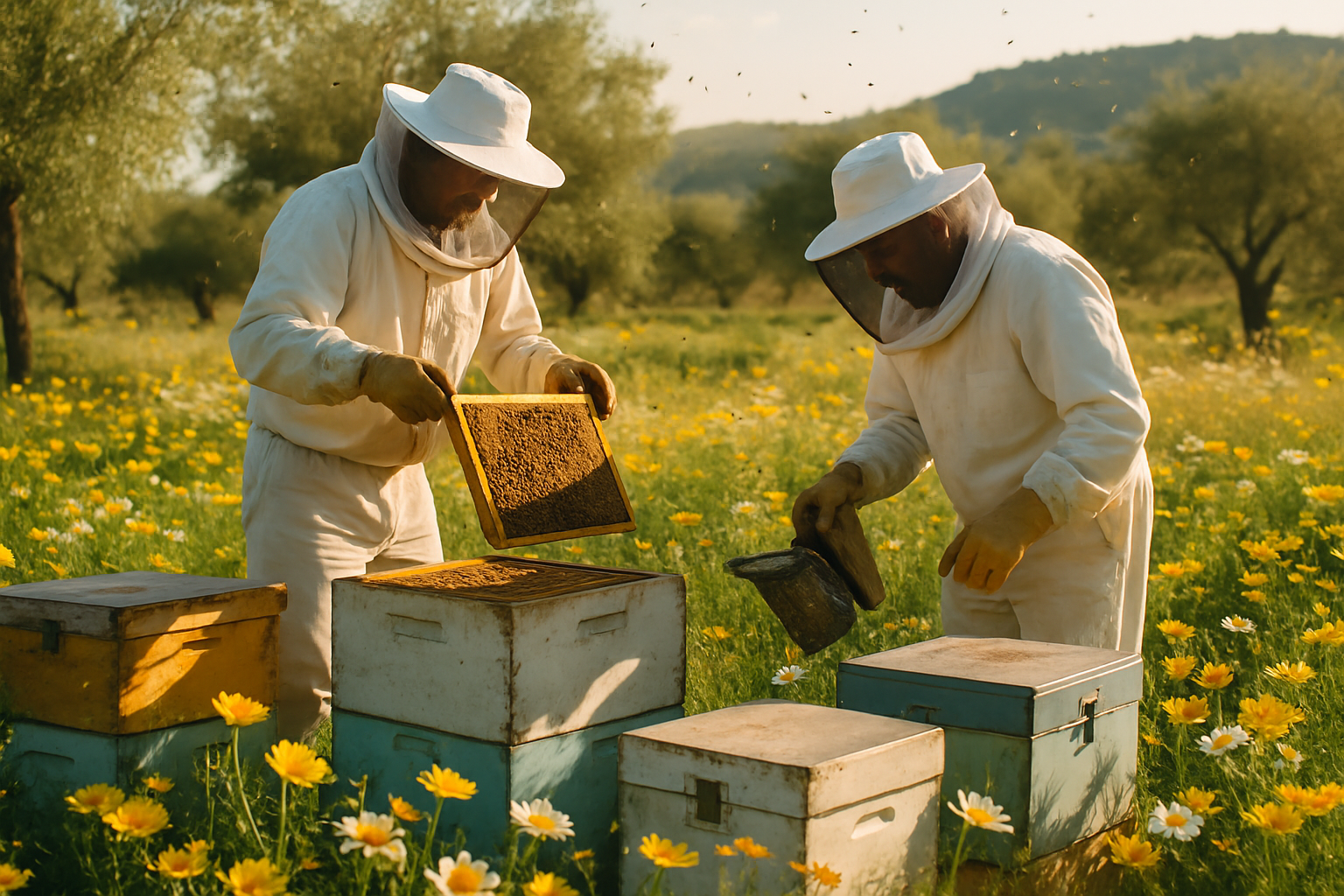
Cyprus has its own honey bee, a long tradition of village beekeeping and a handful of family apiaries that open their hives to visitors. Most of them are in the hills of the Larnaca district, where nine communities, Kato Drys, Kato Lefkara, Layia, Melini, Odou, Ora, Vavla, Vavatsinia and Agioi Vavatsinias, are promoted together by the Larnaka Tourism Board as the Rural Larnaka Honey Villages. Here is where you can actually suit up, what each visit involves and what it costs.
The island's native bee is a subspecies of its own, Apis mellifera cypria, known for the way it deals with its main enemy, the Oriental hornet: the workers mob a hornet in a tight ball and suffocate it, a defence described in the journal Current Biology in 2007. In January 2026 the head of the Department of Agriculture warned that the local bee is threatened, mainly by queens imported from abroad. According to Visit Cyprus, Cypriot honey draws on more than 1,900 plants. Thyme honey, gathered in summer, is the prized one, strongly aromatic rather than mild, and orange blossom, eucalyptus and multifloral honeys make up the rest of the range.
Traditionally, bees were kept in tzivertia, horizontal clay cylinders stacked in rows and often built into the outside walls of village houses, until wooden hives with movable frames took over in the 20th century. You can still see live colonies in a tziverti at the bee park described below.
Oros Machaira in Melini is a beekeeping family that has kept bees professionally since 1983. Its one-hour visit, Getting to Know the Bee, runs from July to November for all ages: you watch the colony through glass hives without needing a suit, then taste its honeys, mead, honeycomb and honey spreads. It costs 8 EUR from age 12 and 4 EUR for children aged 4 to 11, and under-4s go free. At weekends in the same season you can add Adventures at the Hives, 45 minutes in a beekeeper suit opening a working hive with the staff (15 EUR from age 12, 13 EUR for children aged 4 to 11 and free at age 3; under-18s come with a parent), and its workshops follow the season, with beeswax salves in October and beeswax candles in jars in November. Book through its website or ring +357 25 622 305.
Outside Vavla, on the road to Agios Minas monastery and Kato Drys, Ecophysis runs Become a Beekeeper for a Day, two to three hours in a protective suit inspecting the hives, looking for the queen and the drones and watching the workers. What else you do depends on the month: honey harvesting in August, then extracting and bottling raw honey from September to November. It also runs two-hour beeswax candle workshops and one-hour honey tastings with a farmer's picnic. Prices are not published, so book by phone on +357 96 373013.
In neighbouring Kato Drys, the Bee & Embroidery Museum fills a 300-year-old house with more than 1,000 exhibits, from embroidery and old household and farming equipment to displays on bees and local beekeeping. Entry is 2 EUR, or 1 EUR for students. Visit Cyprus and the Larnaka Tourism Board publish different opening hours, so ring +357 99 89 26 77 before you go.
Further east, Antelia Bee Park near the Achna dam in the Famagusta district has gardens, a eucalyptus wood, a path around the lake and a big playground (entry 3 EUR, children 2 EUR, families 7 EUR). Its guided tours, which the park says Mr Antonis leads himself, last 30 minutes or an hour (4 EUR, children 3 EUR, families 10 EUR) and visit active hives, including colonies kept in a traditional tziverti. The park does not publish its opening times, so ring +357 99 306140 first.
In the Troodos, the Casale Panayiotis hotel in Kalopanagiotis books a beekeeping and honey experience with Pambos Christodoulou, who has produced honey in the Marathasa valley for more than 40 years: you visit his hives in a beekeeper's suit, then watch the honey being extracted and fill your own jar to take away. The Heartland of Legends honey route lists him on +357 99 438247.
The honey villages also hold annual festivals: a World Bee Day and bee festival in May, a honey and beekeeping festival in June and a children's honey festival in September, according to the Larnaka Tourism Board, with dates that change every year. Hive visits are seasonal: Oros Machaira opens its hives only from July to November and never in winter, because cold bees turn aggressive when a hive is opened, so ask what runs in the month you plan to go. Where you go near open hives the suit is provided, and anyone allergic to stings should say so when booking.
If village life among the bees appeals, Cyprus Decoded offers relocation help to make the move as smooth as a spoonful of thyme honey.
