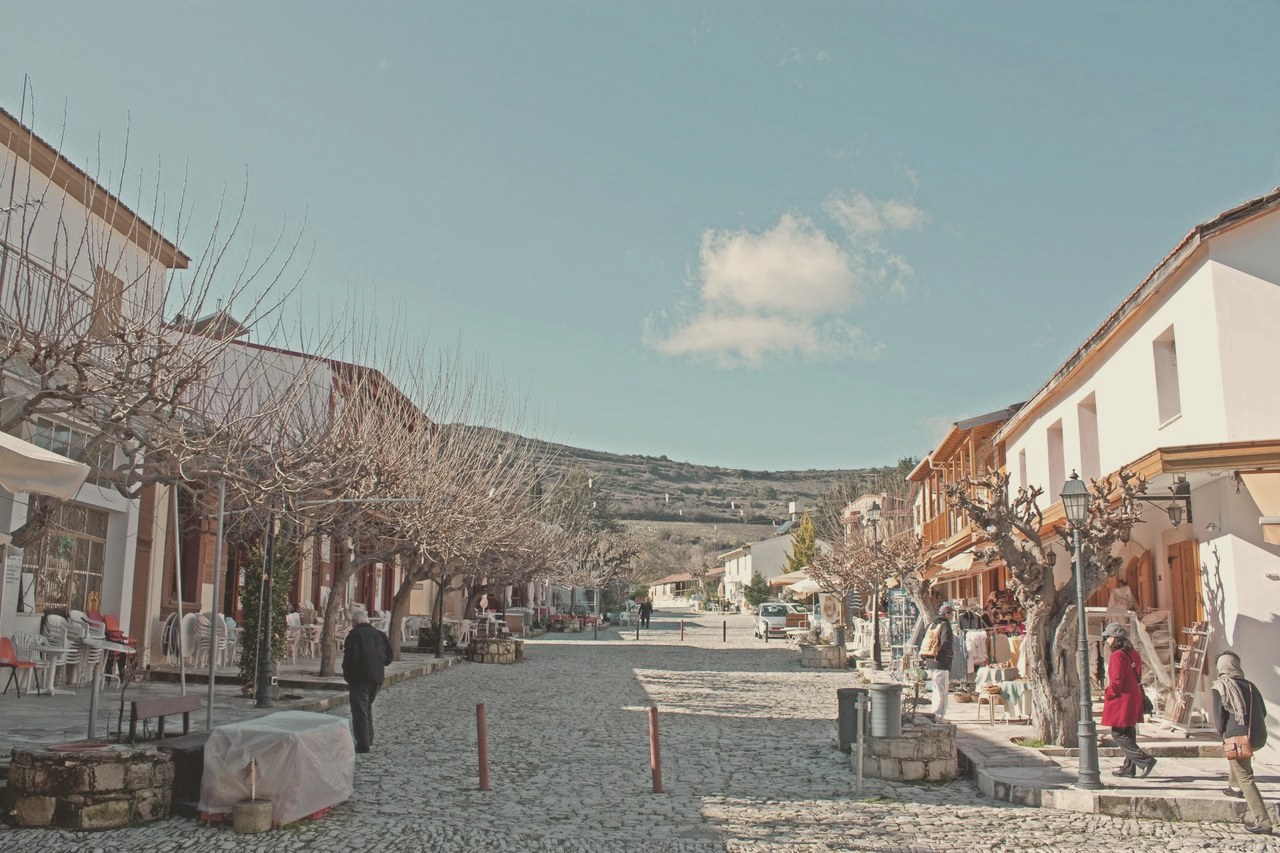
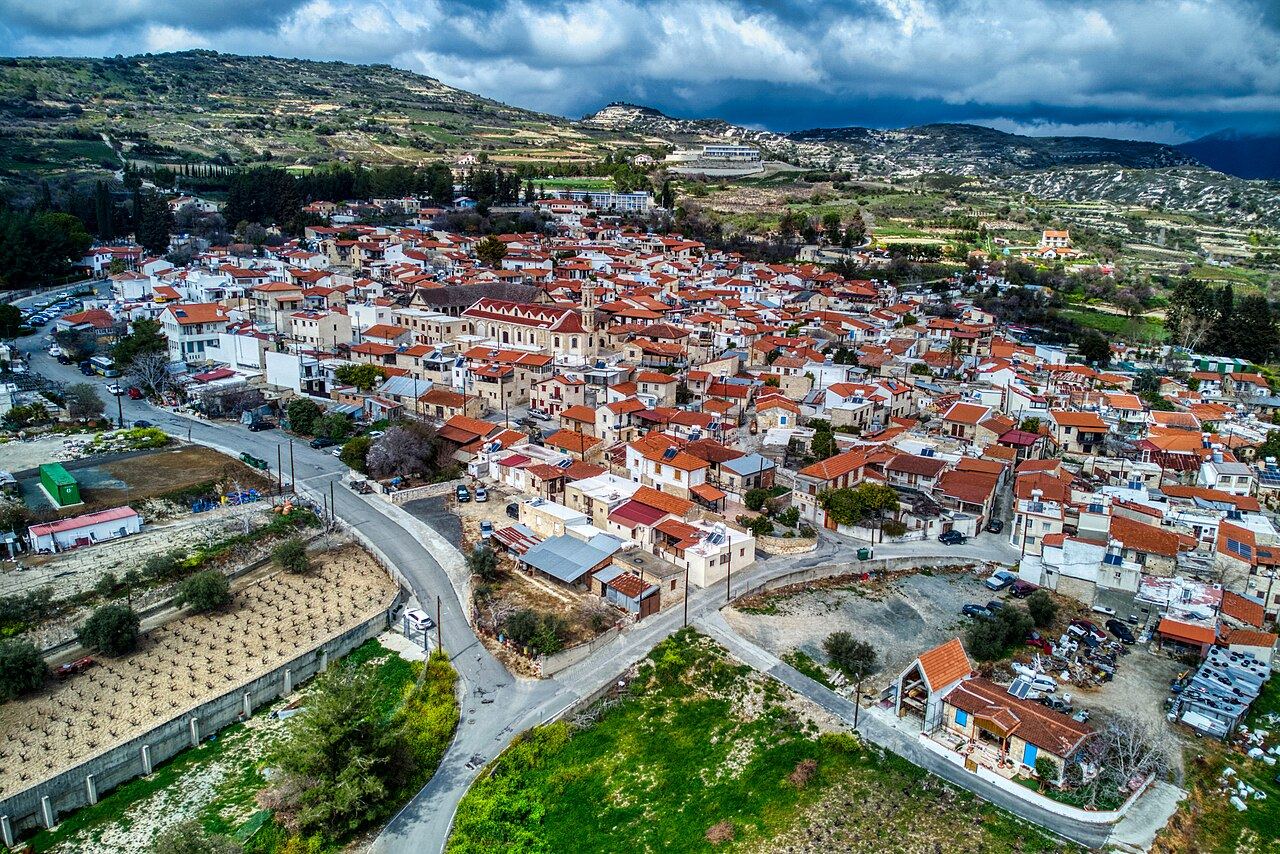
Omodos is a Troodos foothill village that has become Cyprus's main wine tourism destination. Cobbled streets, a 13th century monastery at its heart, stone houses turned into tavernas and craft shops, and family wineries on every corner. Quiet midweek, lively at weekends, a half day trip from Limassol or Paphos.
Arrive in Omodos and the first thing you notice is the sound, or rather the lack of it: footsteps on cobbles, cutlery on taverna tables, swallows wheeling over the monastery courtyard. The village is built around Timios Stavros, and every lane seems to curl back to that square eventually. Yes, the shops sell lace and preserves to visitors, and coach parties do pass through, but wander two streets in any direction and you are in a working hill village of stone houses, vines trained over doorways and neighbours who all know each other. Come early in the morning, or stay on into the evening when the day trippers have gone, and you get the postcard almost to yourself.
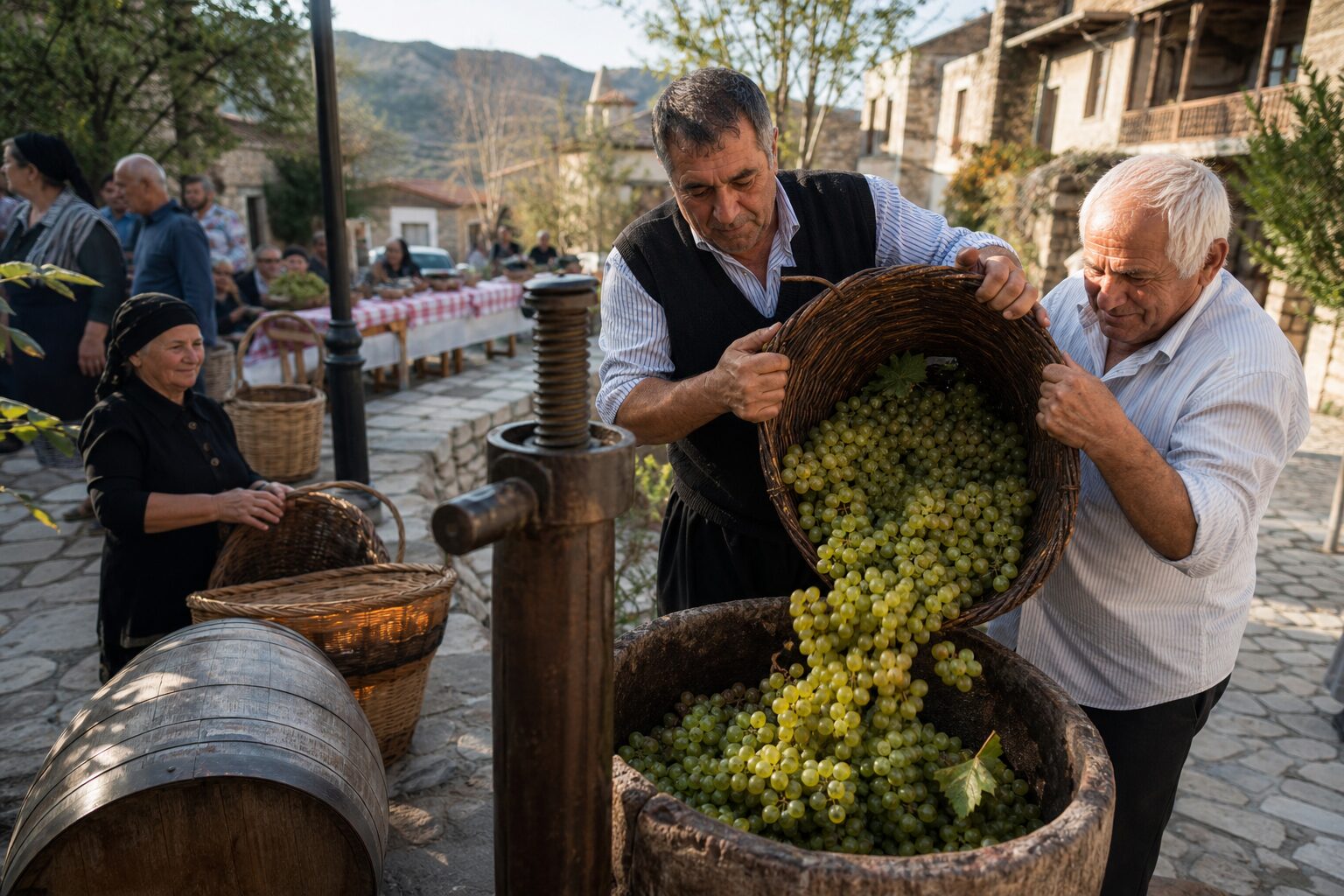
Wine is why this village matters. Omodos sits among the vineyards of the Krasochoria, the wine villages of the Limassol hills, and cellars here have been pressing grapes for centuries, as the old press in the Linos museum makes plain. Tasting your way between the family wineries is the classic afternoon, and autumn, when the harvest comes in and the vines turn gold, is the loveliest time to do it. Pair the tasting with a slow meze in the square or warm bread from the wood-fired bakery, and read our eat and drink guide first so you know what to order and how a Cypriot table works.
Omodos suits anyone chasing the Cyprus that existed before the beach resorts: couples on a slow afternoon, food and wine people, photographers, families happy to potter. Half a day covers the village itself, so most people fold it into a longer mountain drive; our things to do guide shows how it fits into the wider island. The village also celebrates hard, with wine festivities and religious feast days through the year, so check the events calendar before you pick your date.
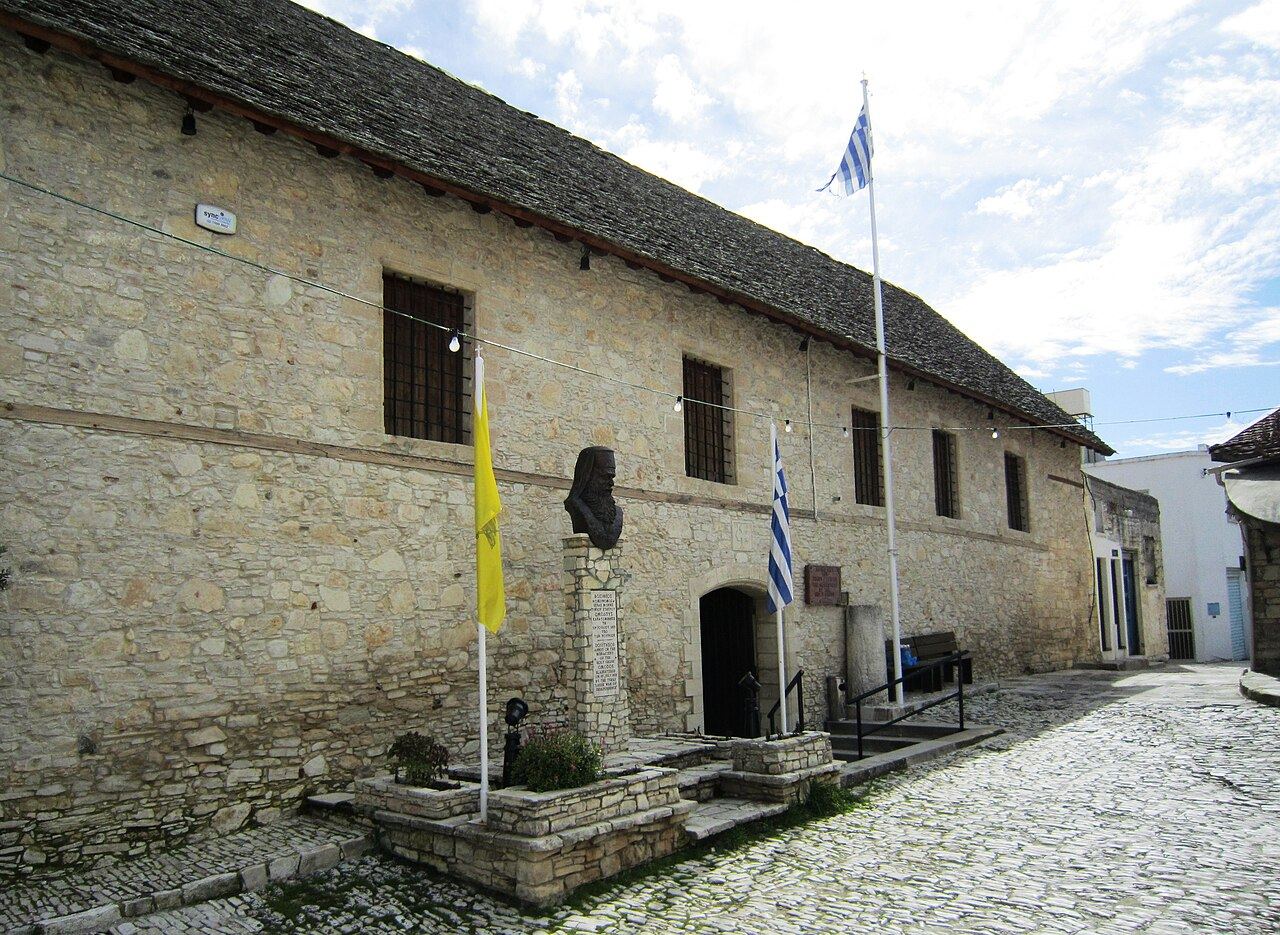
Holy Cross Monastery at the centre of the village, founded in the 4th century. Houses a relic of the Holy Cross.
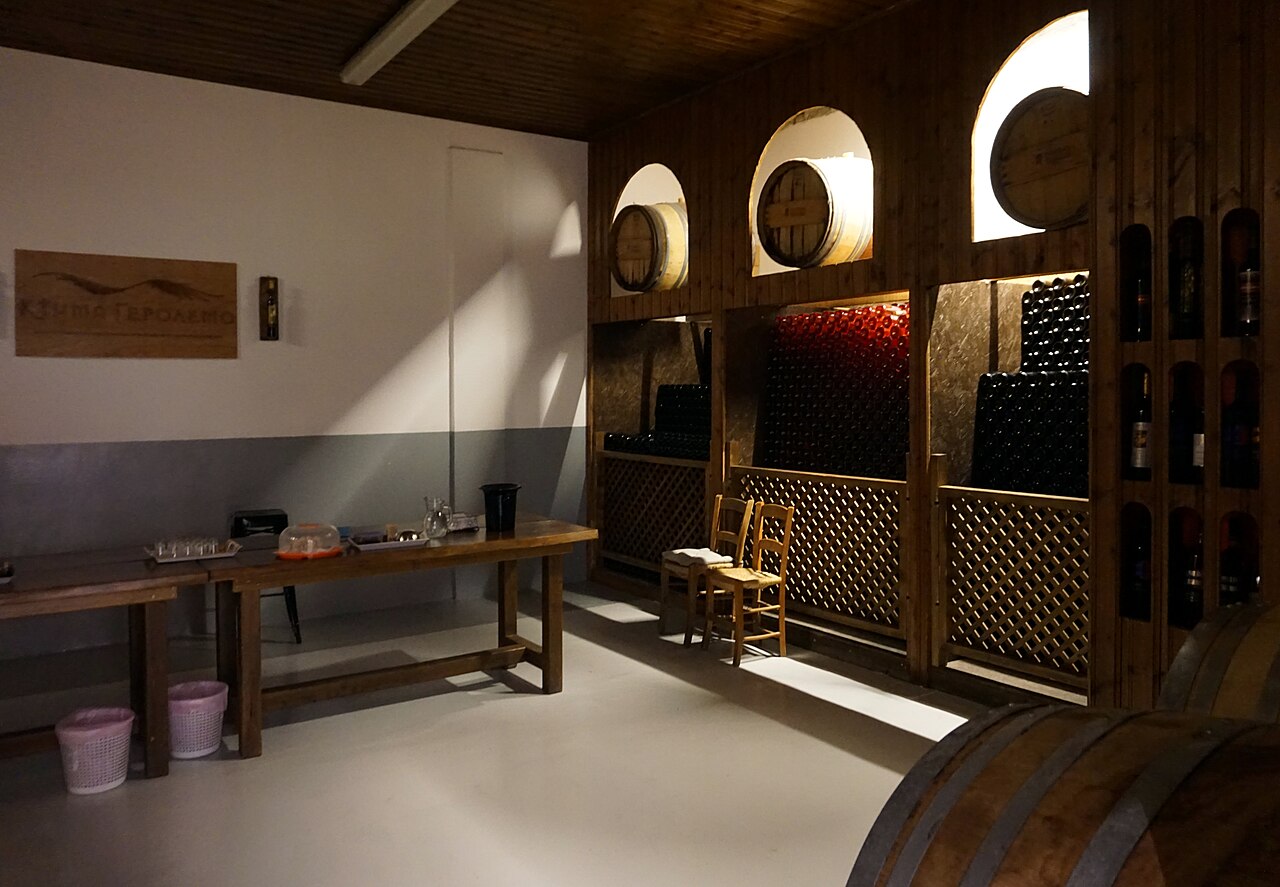
Linos, Gerolemo, Oenou Yi and several others. Walk between them, taste commandaria and local xynisteri.
The main square outside the monastery, ringed by tavernas. The Cyprus village postcard, in three dimensions.
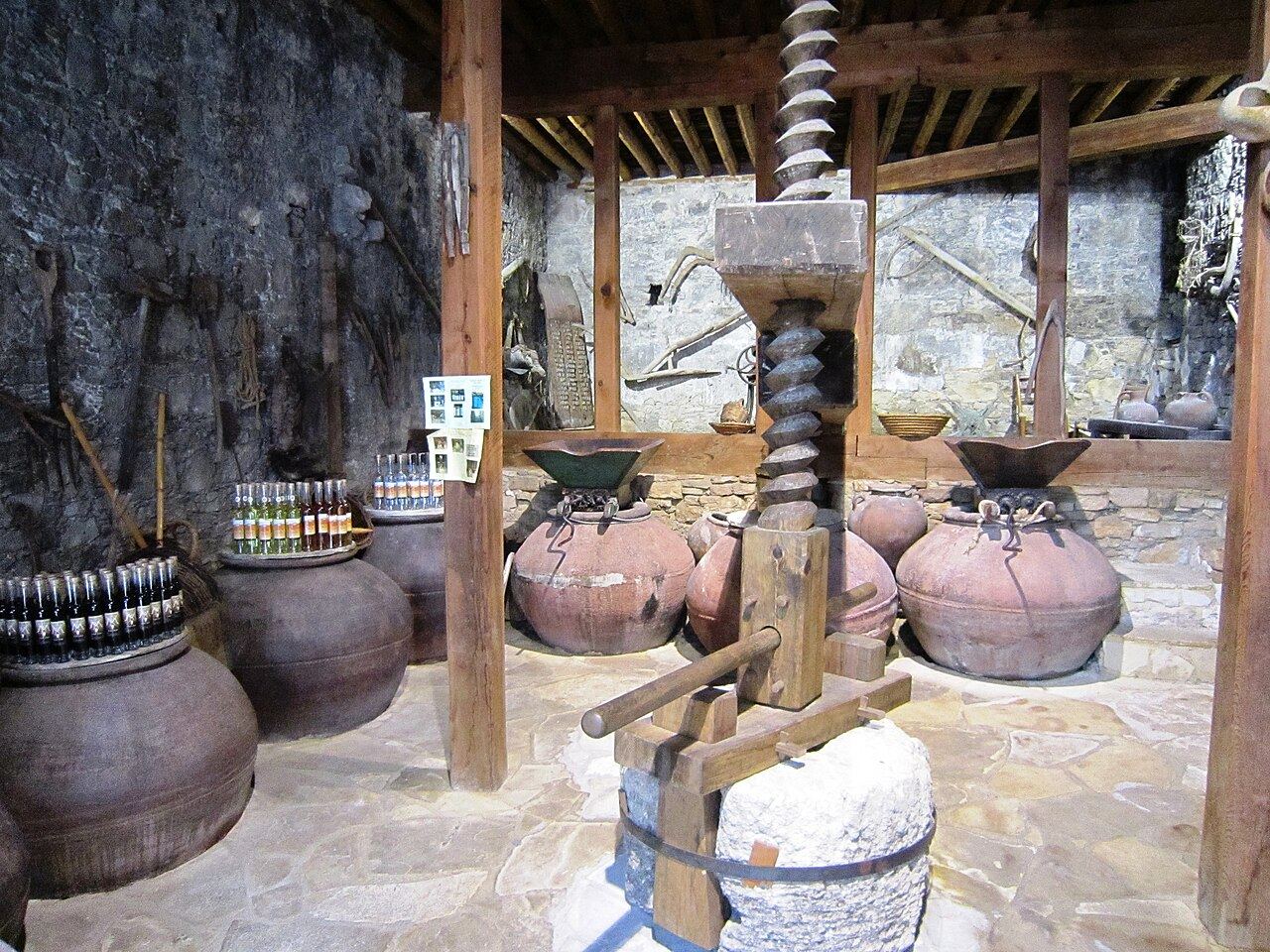
Inside an old village house, a traditional wine press and tools showing how the village made wine for centuries.
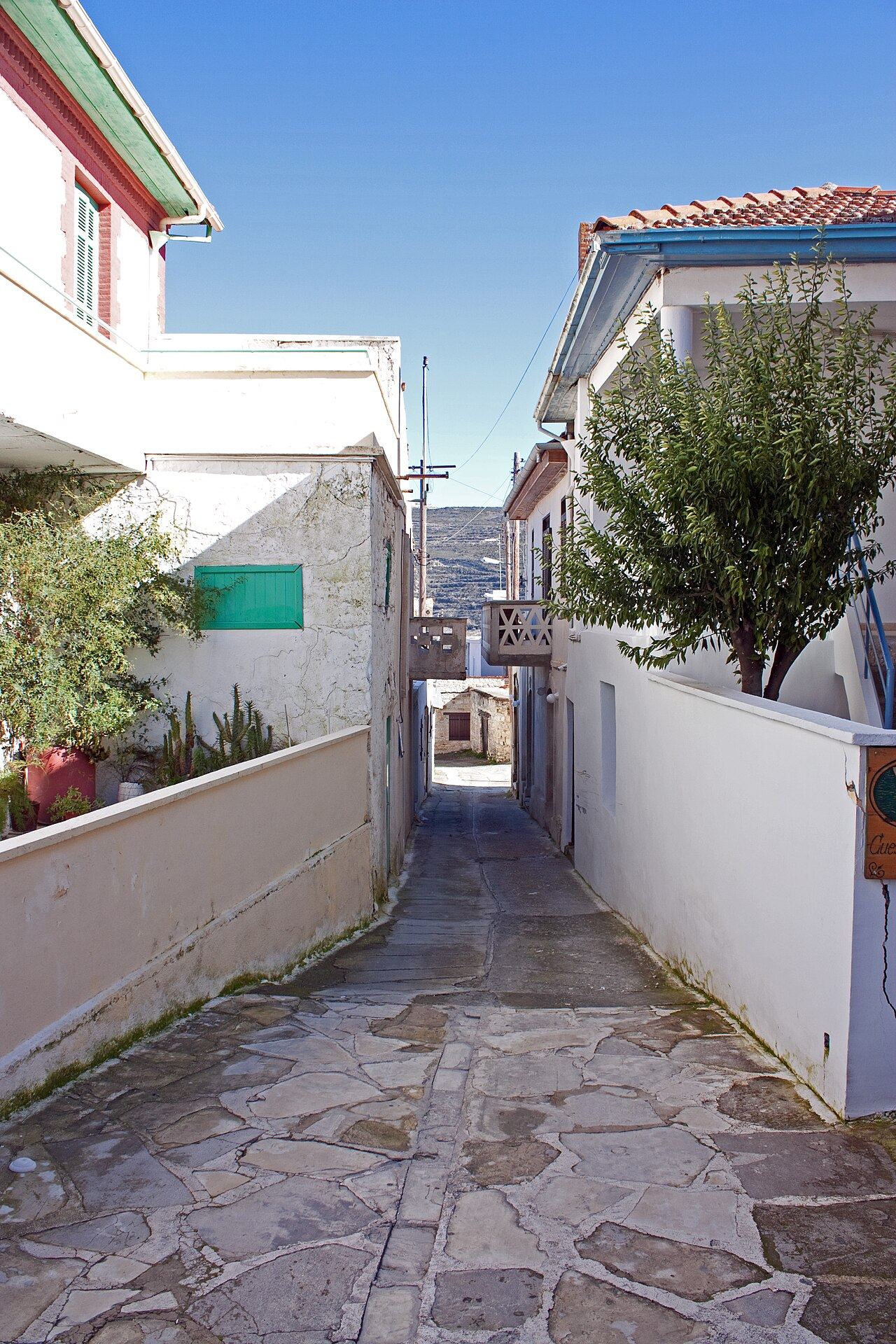
Restored 18th century village house open as a free museum. Lace-making, embroidery, the works.
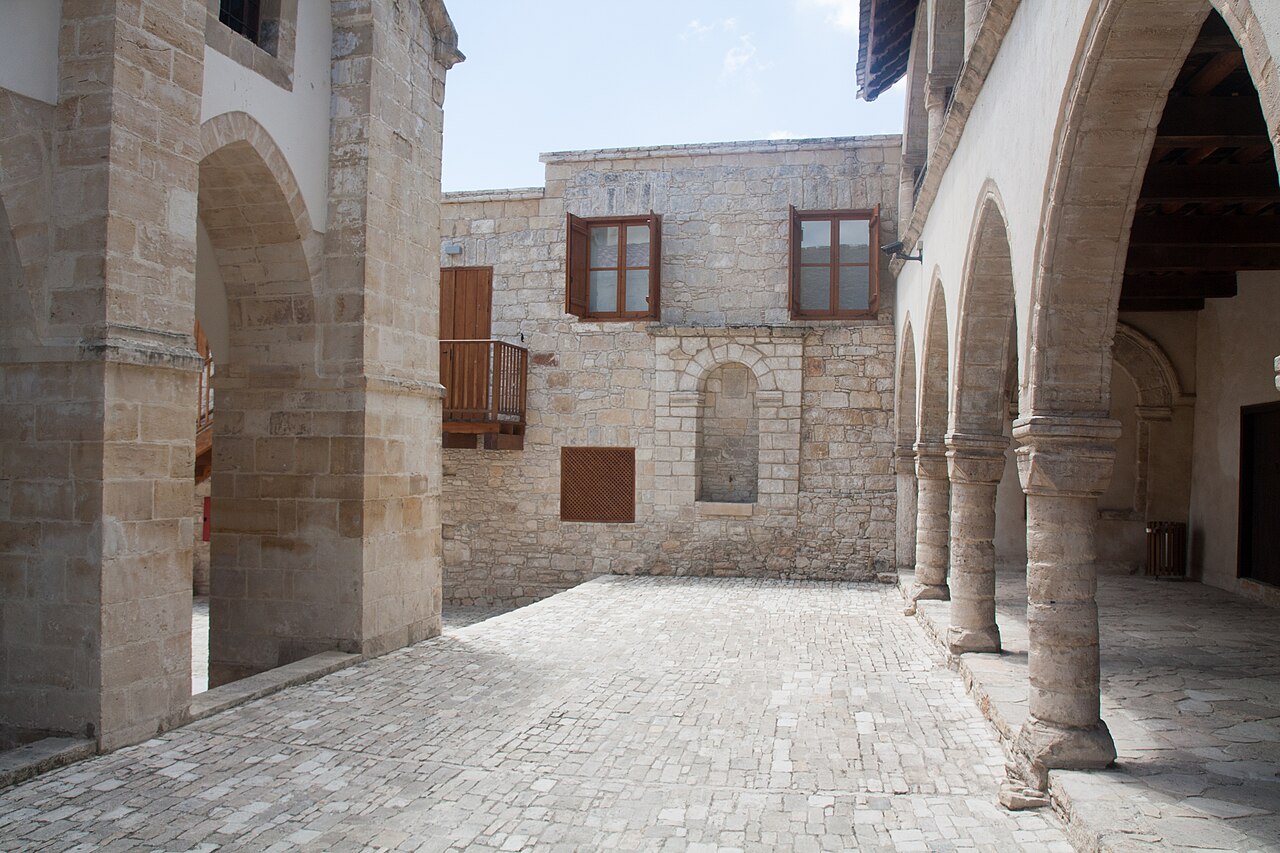
Omodos is famous for pipilla lace, made by the village women. Real, handmade, and not cheap, but worth it.
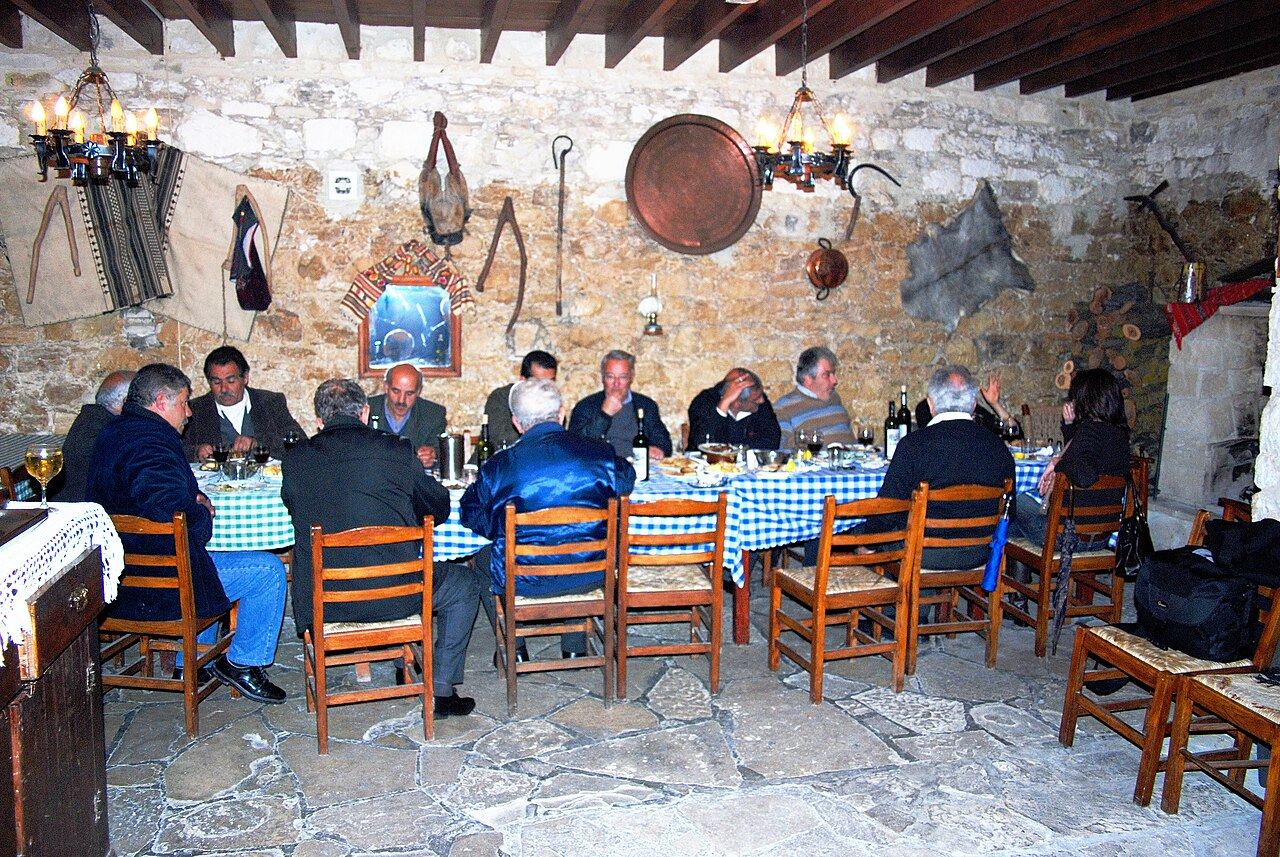
Original village bakery still firing a wood oven for koulouri, arkatena rusks, and traditional bread.
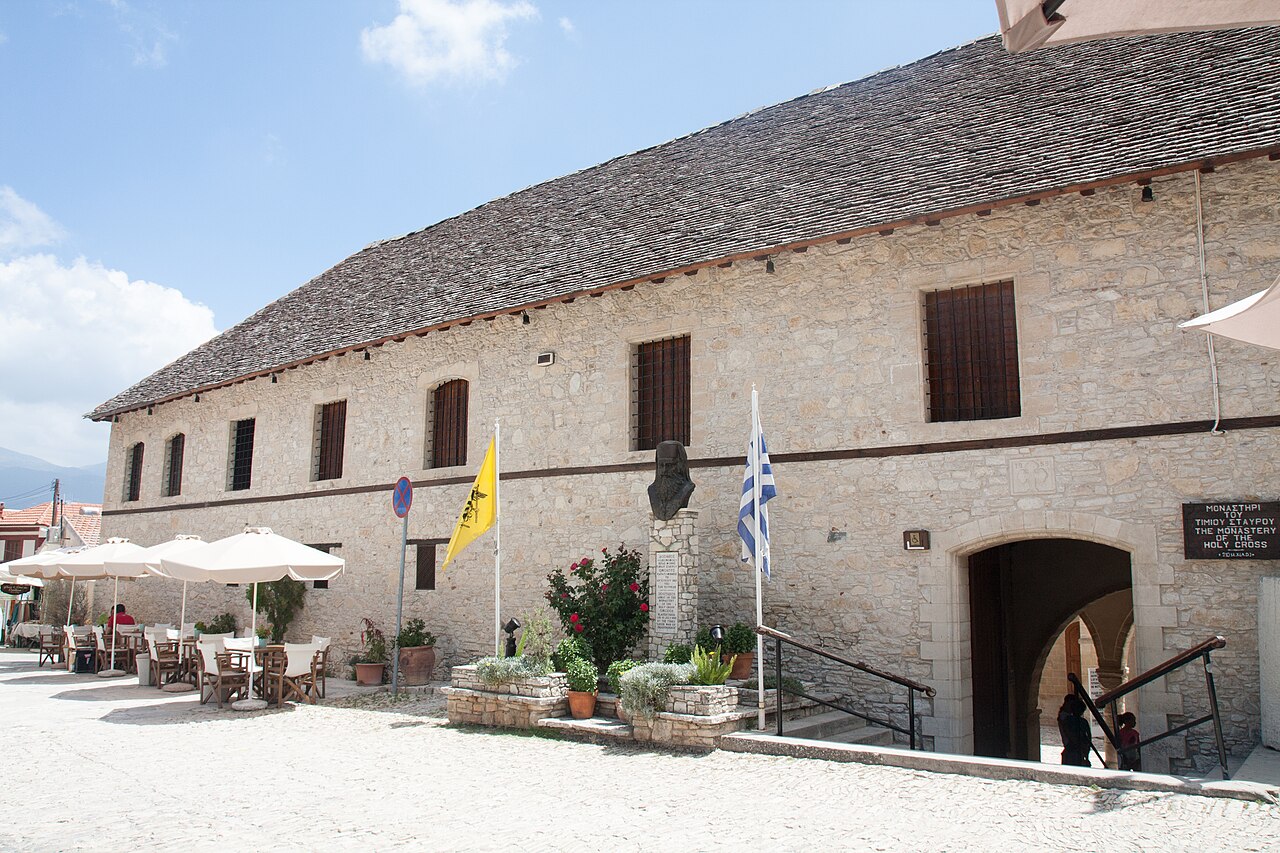
Tucked around the monastery courtyard are small museums of Byzantine icons and village history, with a folk collection of looms, tools and traditional dress. Ten quiet minutes that explain how this village lived for centuries.
Omodos sits in the heart of the Krasochoria, the wine villages of the Limassol hills. Walk or drive the vineyard lanes towards Vasa, Koilani and Lofou for cellar-door tastings and valley views, prettiest at harvest time in September.
The calendar runs five years ahead. Fixed and Easter-linked dates are exact; festivals with organiser-set dates show their usual month until confirmed. If a month is quiet, the next events coming up are listed instead.
We can put a personalised itinerary together, or just point you at the right tavernas. No pressure either way.
Get in touch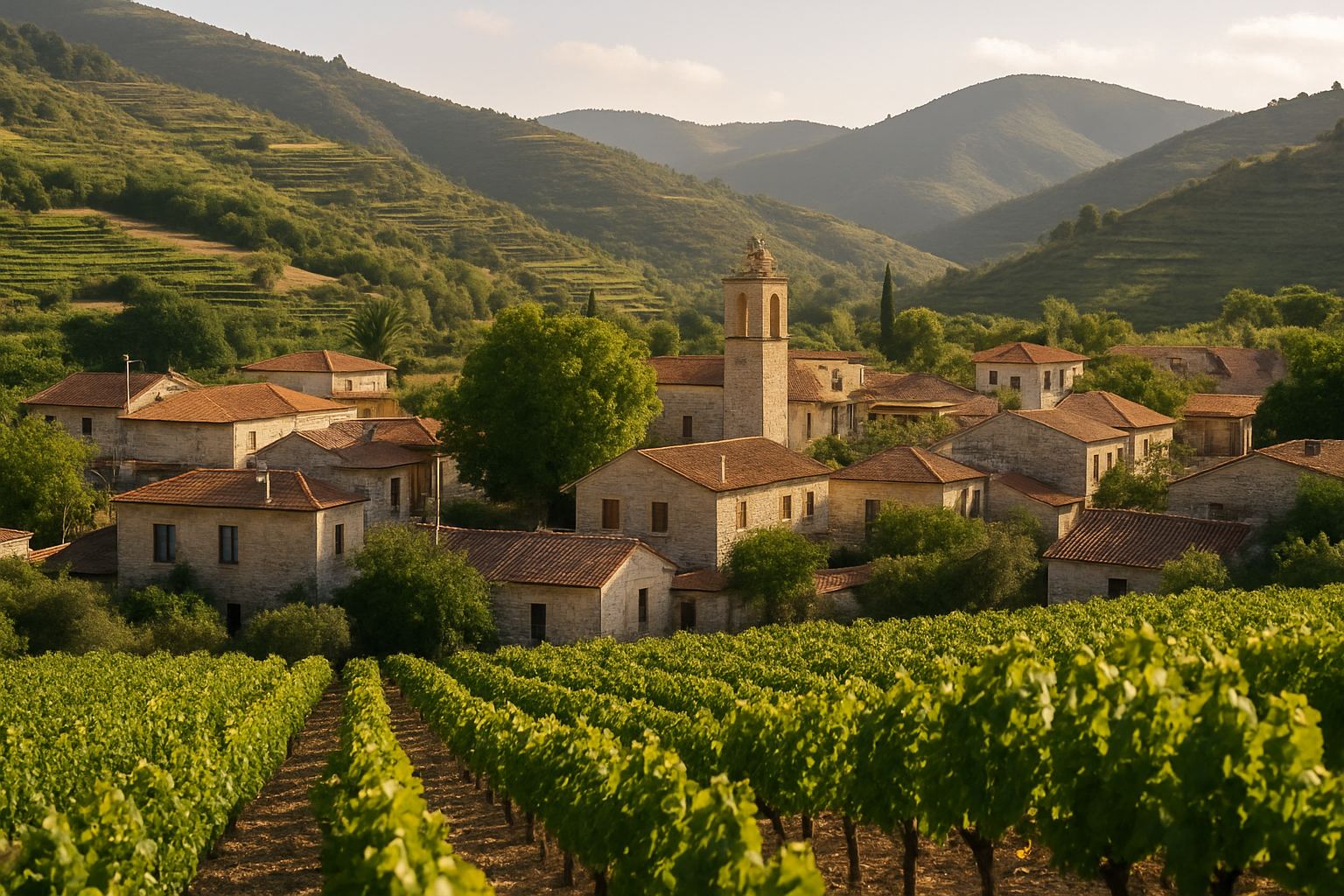
Sip your way through Cyprus' lesser-known wine villages and uncover their rich traditions.
Read
Crusaders named it, a king poured it at his wedding, and fourteen Troodos villages still make it.
Read
Unveil the magic of Cyprus' coastline with a sunset kayaking experience.
Read