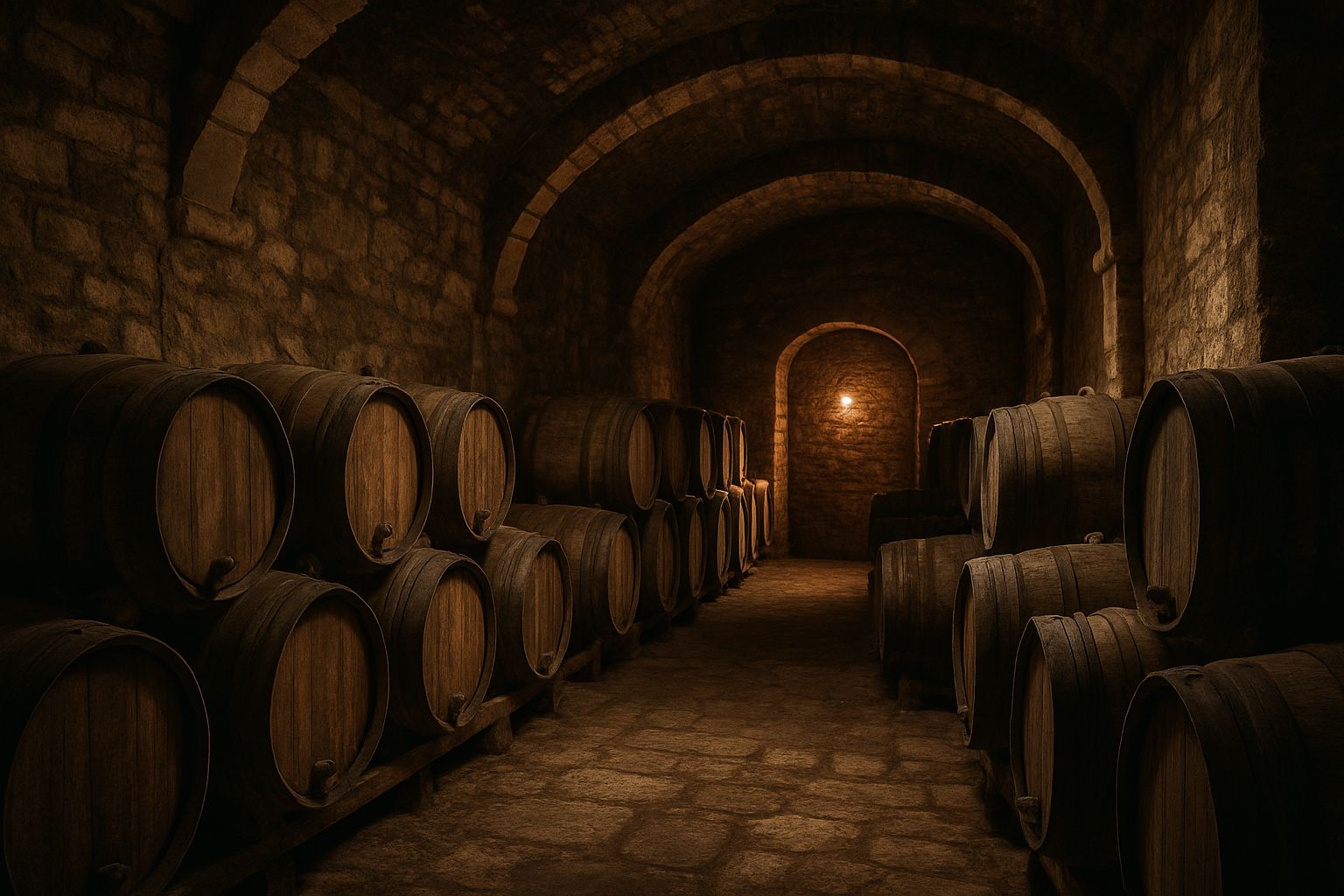
Step beneath the sun-drenched landscapes of Cyprus and you find the places where the island's wine is pressed, stored and aged out of the heat: stone press houses, hillside caves and barrel rooms sunk into the mountains. Most working cellars are private, but a handful welcome visitors, and together they trace a winemaking story that archaeologists put at some 5,500 years. Here is where to see it for yourself.
That figure comes from Erimi, a village 13 km west of Limassol. Between 1932 and 1935 the archaeologist Porphyrios Dikaios excavated a Chalcolithic settlement there and turned up fragments of round flasks, which then sat unwashed in the stores of the Cyprus Museum for decades. In 2005 an Italian team led by Maria Rosaria Belgiorno tested 18 of them, and 12 held traces of tartaric acid, a chemical marker of wine. The flasks date to roughly 3500 BC, which is why Cyprus lays claim to some of the oldest wine in the Mediterranean.
Erimi is also home to the Cyprus Wine Museum, housed in a traditional stone building on the old Limassol to Paphos road, a few minutes from Kolossi Castle, the Knights Hospitaller stronghold whose Grande Commanderie gave Commandaria its name. The collection runs from ancient jars and medieval drinking vessels to old documents and winemaking tools, with displays on the island's native grapes. It opens every day from 10:00 to 17:00, except public holidays. Entry is 5 euros, or 10 euros with a glass of wine or Commandaria, and 15 euros buys a tasting of four wines, Commandaria and zivania with a small platter.
Up in the wine villages of the Limassol hills, Omodos keeps the island's best-known piece of old press-house machinery. Linos tou Charilaou, a short walk from the Monastery of the Holy Cross, is a medieval wine press in a long stone room with a flagstone floor: rows of vats, an old stone and brick cauldron and a massive double wooden beam, lowered by a giant wooden screw set into a cylindrical stone about a metre across. The pressed grape skins left over, known as zivana, went on to make zivania, the island's grape spirit. The press is a listed Ancient Monument owned by the Department of Antiquities and is open to visitors.
For a cellar that is genuinely underground, head to Kathikas on the Paphos side of the island. Sterna Winery, a small family-owned boutique winery operating since 1995, ages its wines in a stone-walled cave on its grounds and keeps a little museum of antique winemaking equipment beside it. Guided visits and tastings run on site, and groups of more than ten should book ahead on +357 99 170699.
The modern version sits high in the Troodos. Kyperounda Winery, in the Pitsilia village of the same name, stands at around 1,200 metres and bills itself as Europe's highest winery. It was built on three levels so the juice can move through the building gently, and its subterranean cellars hold about 300 oak barrels of 225 litres each. Look out for Petritis, its white made entirely from the native Xynisteri grape. Published visiting hours differ between sources, so ring +357 25 532043 before you drive up.
A few practical points. Cellars and caves stay cool all year, so bring a light layer even in August, and wear flat shoes for stone steps and uneven floors. These are small working businesses rather than attractions with ticket desks, so call ahead, especially if you are a group. And pick a designated driver or book one: the roads up to Omodos, Kathikas and Kyperounda are winding.
Cyprus' underground wine cellars are more than just storage spaces; they are a living testament to a winemaking tradition that has endured through wars, occupation and economic change. As you sample the island's finest vintages, consider that each bottle is a culmination of history, culture and craftsmanship. The experience is a reminder that some of the greatest treasures are not the ones on display but those quietly waiting to be discovered.
As you plan your move or visit to Cyprus, bear in mind that these cellars are just one part of the island's rich tapestry. Whether you are drawn by the allure of aged wines or the promise of new beginnings, Cyprus offers a unique blend of history and hospitality. For more detailed advice or relocation help, Cyprus Decoded stands ready to assist in making your transition as seamless as possible.
