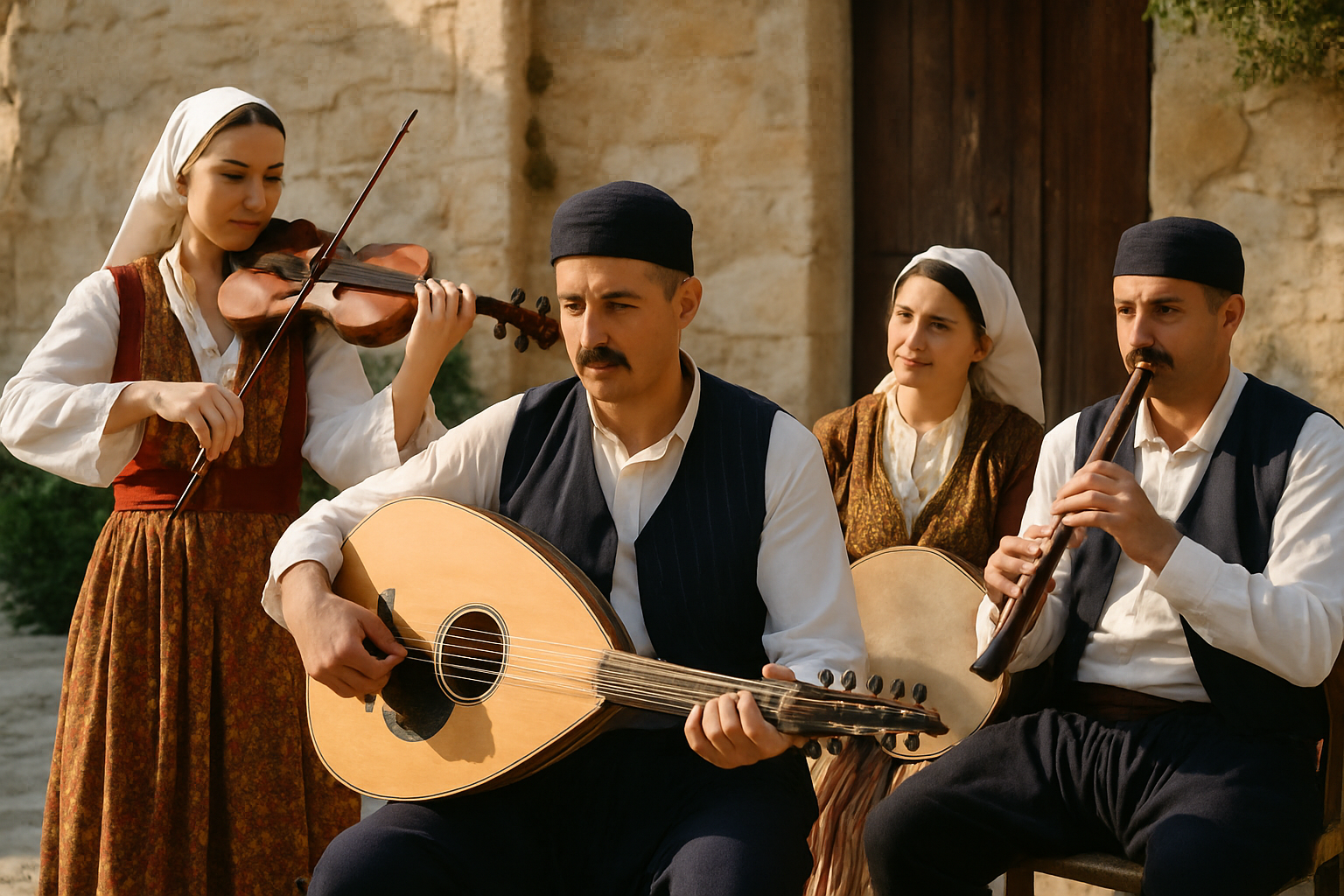
From the first strum of a lute to the gentle hum of a violin, the traditional music of Cyprus offers a melodic journey that unites the island's many influences. Enriched by a tapestry of Greek, Turkish, and Middle Eastern sounds, Cypriot music is a reflection of the island's diverse history. What makes it truly enchanting is its ability to remain timeless while continuing to evolve, providing a profound sense of continuity for both locals and visitors alike.
Central to Cypriot traditional music is the laouto, a long-necked stringed instrument that lends its soulful notes to many a folk tune. Often accompanied by the violin, the laouto takes centre stage in performances, weaving intricate melodies that echo the island's storied past. These traditional gatherings, known as "glenti," are vibrant affairs where music, dance, and communal spirit merge into a celebration of life as old as the island's olive trees.
The traditional dances of Cyprus, such as the sousta and the syrtos, are inseparable from its musical heritage. These dances, which vary in tempo and style, showcase the island's cultural blend. The sousta, an energetic couple dance, is often performed at weddings and festivals, with dancers moving in a spirited exchange that mirrors the music's lively beats. Meanwhile, the syrtos, a chain dance, invites participants to join in a more measured but equally engaging communal rhythm.
Beyond the familiar laouto and violin, other instruments add depth and character to Cypriot music. The tsambouna, a type of bagpipe, and the tamboutsia, a frame drum, bring additional layers of sound that enrich the musical experience. These instruments, though less common in modern performances, are cherished for their unique textures and historical significance, often featured in recordings and festivals dedicated to preserving Cypriot musical traditions.
The preservation of these musical traditions is not left to nostalgia alone. Several cultural organisations and music schools across Cyprus are dedicated to teaching the island's musical heritage to new generations. This ensures that the evocative melodies and rhythms continue to resonate, passing from teacher to student, parent to child. Events like the annual Kypria International Festival showcase not only traditional music but also a range of other artistic expressions, bridging the old with the new.
One cannot explore Cypriot music without acknowledging the influence of the island's geographic neighbors. The close proximity to Turkey and the Middle East, alongside Greece's cultural imprint, has created a musical dialogue that is both complex and harmonious. This exchange is evident in the repertoire of many contemporary Cypriot musicians who blend traditional themes with modern genres, creating a rich soundscape that appeals to diverse audiences.
Visiting Cyprus offers a chance not just to hear but to experience this music first-hand. Whether you're wandering through the narrow streets of Lefkara or relaxing in a Limassol taverna, the strains of a laouto or the rhythm of a tsambouna might catch your ear. In these moments, the music becomes a living narrative, inviting you into the island's vibrant cultural tapestry.
For those looking to immerse themselves more deeply in Cypriot life, understanding and appreciating its music can be a stepping stone. It offers a window into the heart of the island's traditions and a common ground upon which visitors and locals can connect. Should you find yourself captivated by Cyprus, exploring opportunities for a more permanent stay might be your next step. Our relocation help can guide you through the process, ensuring that Cyprus feels like home.
