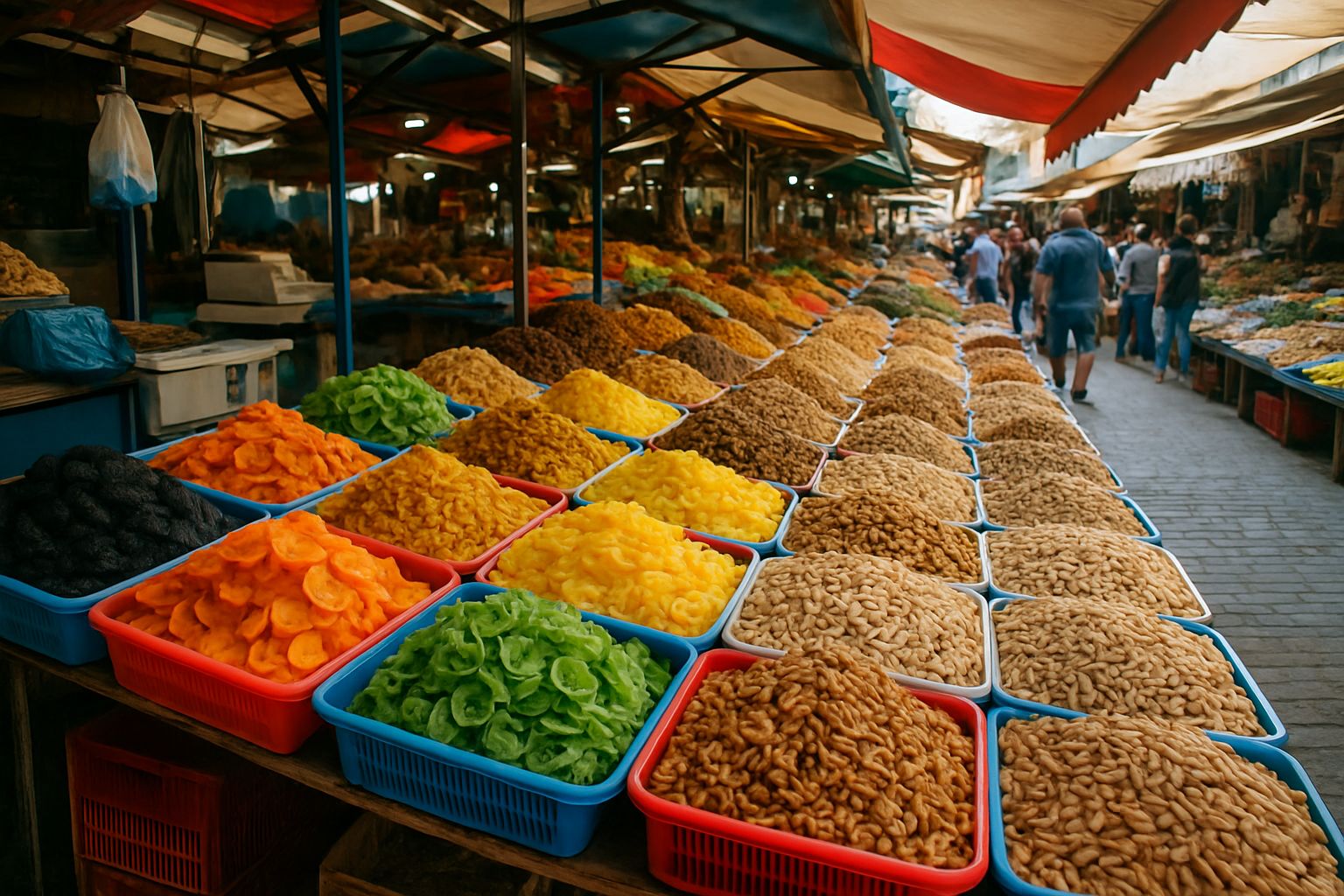
The dried fruit and nuts worth hunting down in Cyprus are the island's own: carobs, grape must and almonds, turned into sweets that villages have made the same way for generations. The best places to buy them are the villages that still make them, the village fairs and the covered markets in town, and each one comes with a story worth knowing before you shop.
Start with the carob, the pod once called Cyprus' black gold. The carob tree is native to the island and has been cultivated here for some four thousand years, and its pods were once the island's main export, prized because they kept well and could be shipped over long distances. Boiled down, they give a dark, sticky carob syrup that is sold all over the island and is delicious drizzled over yoghurt or fresh anari cheese.
The place to see carob turned into something special is Anogyra, a village in the hills of western Limassol district and the last stronghold of traditional pastelli. Despite the name it shares with the Greek sesame bar, Cypriot pastelli is carob and nothing else. The carobs are ground and soaked, and the juice is boiled for hours in copper cauldrons until it thickens, then cooked again until it becomes a dark, heavy mass. That mass is hung on a wooden peg on the wall and pulled, stretched and braided by hand until it turns golden. It is only made between September and May, because it will not hold its shape in the summer heat.
The village's own website lists a pastelli workshop museum, To Paradosiako, where you can watch the whole traditional process, and a Carob Thematic Centre in the renovated former primary school, with an interactive wall and audiovisual displays that follow the carob from the tree to the syrup and the sweet. These are small village venues, so check opening times before you drive up. Anogyra normally celebrates the harvest with a pastelli festival in the village square each September; this year's has been postponed, and no new date had been announced at the time of writing.
Down on the coast, the Old Carob Mill on Vasilissis Street, behind Limassol's medieval castle, tells the export side of the story. Built around 1900, when Cypriot carobs went into everything from photographic film plates to medicines, sweets and chocolate, it worked as a carob mill until 1960 and still has its sorting hoppers, scales and milling machinery in place. Entry is free, and it is open all year except on public holidays (+357 25 342 123).
The other great Cypriot sweet on the dried-goods shelf comes from the grape harvest. Soutzoukos looks like a knobbly brown candle: almonds, or sometimes walnuts, are threaded onto strings two to three metres long, dipped three to five times in hot, thickened grape must until they are about an inch thick, then hung for five or six days to dry, after which they keep for months. The same must, thickened with flour and scented with rose water, is eaten on its own in harvest season as palouzes, a soft grape-must cream. Soutzoukos is made in the wine villages of the Troodos and Paphos regions, and it is traditionally sliced and served with a glass of zivania.
For both, head for the wine villages at harvest time. Omodos, 800 metres up in the Krasochoria about 42 km from Limassol, makes wine, zivania and a range of sweets from grape must, and its big cobbled square slopes down to the Timios Stavros (Holy Cross) monastery. The liveliest time to go is the Holy Cross fair: every 14 September the village holds one of the biggest religious fairs in Cyprus, three days with vendors filling the square. While you are there, try the village's arkatena bread, covered in our guide to artisan bakeries.
In town, the covered municipal markets are the closest thing to a traditional market hall. Paphos' Agora in the old town is a covered market selling souvenirs, lace, ceramics, local specialities and fresh fruit, and Limassol's old municipal market on Saripolou Square has been renovated as Limassol Agora, a food market with a bakery, a fruit and deli shop and places to eat. Stock varies from stall to stall, so treat both as places to browse rather than guaranteed pastelli stops.
Taking some home? Soutzoukos keeps for months, so it is an easy souvenir, and carob syrup can stand in for honey or sugar in baking, salad dressings, marinades and sauces.
If the idea of immersing yourself in Cypriot culture through its markets appeals to you, why not consider making Cyprus a more permanent home? The island not only offers a rich heritage and delectable cuisine but also a welcoming environment for those looking to relocate. At Cyprus Decoded, we offer relocation help to those eager to start their new adventure in this Mediterranean gem.
