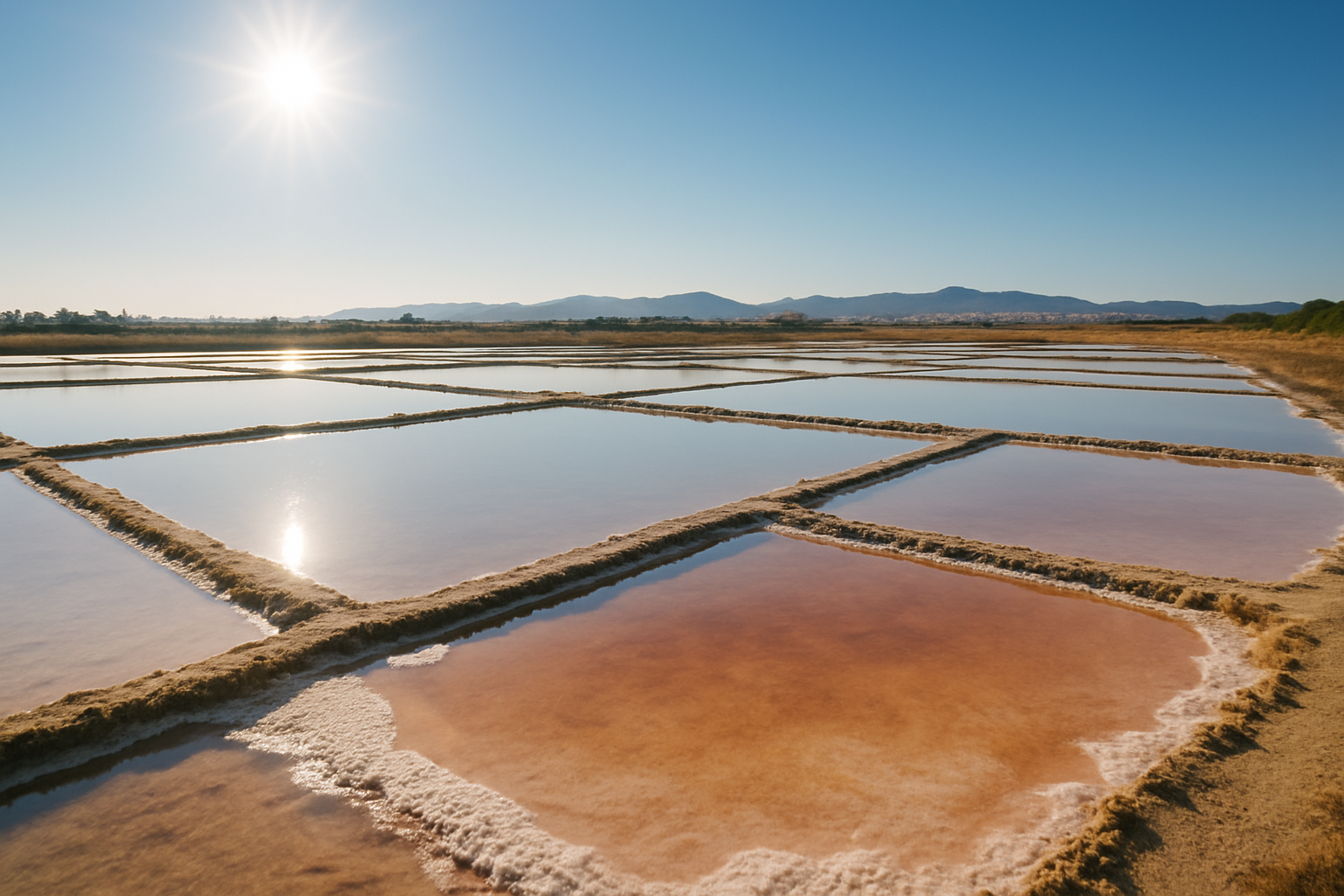
In the sun-drenched corners of the Mediterranean, Cyprus offers more than just idyllic beaches and rich history. It is also home to a tradition that shaped both its landscape and its trade for centuries: salt harvesting. Every summer the Larnaca Salt Lake still dries out into a glistening white crust, a reminder of the work that once went on there.
In Cyprus, nature did most of the work. The Larnaca Salt Lake fills with water in winter, and as the summer sun evaporates it, a thick crust of salt is left behind. For centuries that crust was raked up by hand, and donkeys carried the salt away.
The history of salt in Cyprus is rich. Throughout the Middle Ages salt was so plentiful that it became one of the island's main exports, and its harvesting and sale were strictly controlled and taxed. Salt was more than a seasoning: long before refrigeration, it was the main way to preserve food. Its value even lives on in language, since the English word 'salary' is often said to come from the Latin salarium, which is linked to salt.
The Larnaca Salt Lake, a complex of four lakes on the western edge of Larnaca, was the island's great salt works. As labour costs rose, harvesting dwindled in the early 1980s and stopped altogether in 1986, and the island now imports its salt. In winter the lakes still fill with water and become a haven for migratory birds, including thousands of flamingos between November and March, and by summer the water recedes to leave a sprawling field of white salt crystals.
Today the lake is valued for its wildlife rather than its salt. It was declared a protected area in 1997 and is a Ramsar site and part of the EU's Natura 2000 network, making it one of the most important wetlands in Cyprus.
Exploring Salt Culture in Cyprus
For visitors, the Larnaca Salt Lake is easy to reach, just off the road to the airport. In summer the dry lakebed glitters with salt, and a signposted 4 km nature trail with benches leads from the lake towards the old Kamares aqueduct. The Hala Sultan Tekke stands on the west bank, and in winter, when the flamingos are in, BirdLife Cyprus leads birdwatching outings at the salt lakes; the next is on Saturday 12 December 2026 at 09:00, and booking is required.
Cyprus's other great salt lake, at Akrotiri near Limassol, is the largest inland body of water on the island. It lies inside the British Western Sovereign Base Area and is known today for its flamingos rather than its salt; the Akrotiri Environmental Education Centre in Akrotiri village overlooks it, with telescopes and binoculars for visitors. Our guide to Cyprus' coastal wetlands has more on both lakes.
If this slice of island history appeals to you, Cyprus might just be calling. Whether you're inspired by its culinary delights or its natural beauty, understanding the island's past, from its salt trade to its wetlands, can enrich your experience. And, if the thought of making a more permanent move has crossed your mind, Cyprus Decoded is here to offer relocation help to make your transition as smooth as possible.
