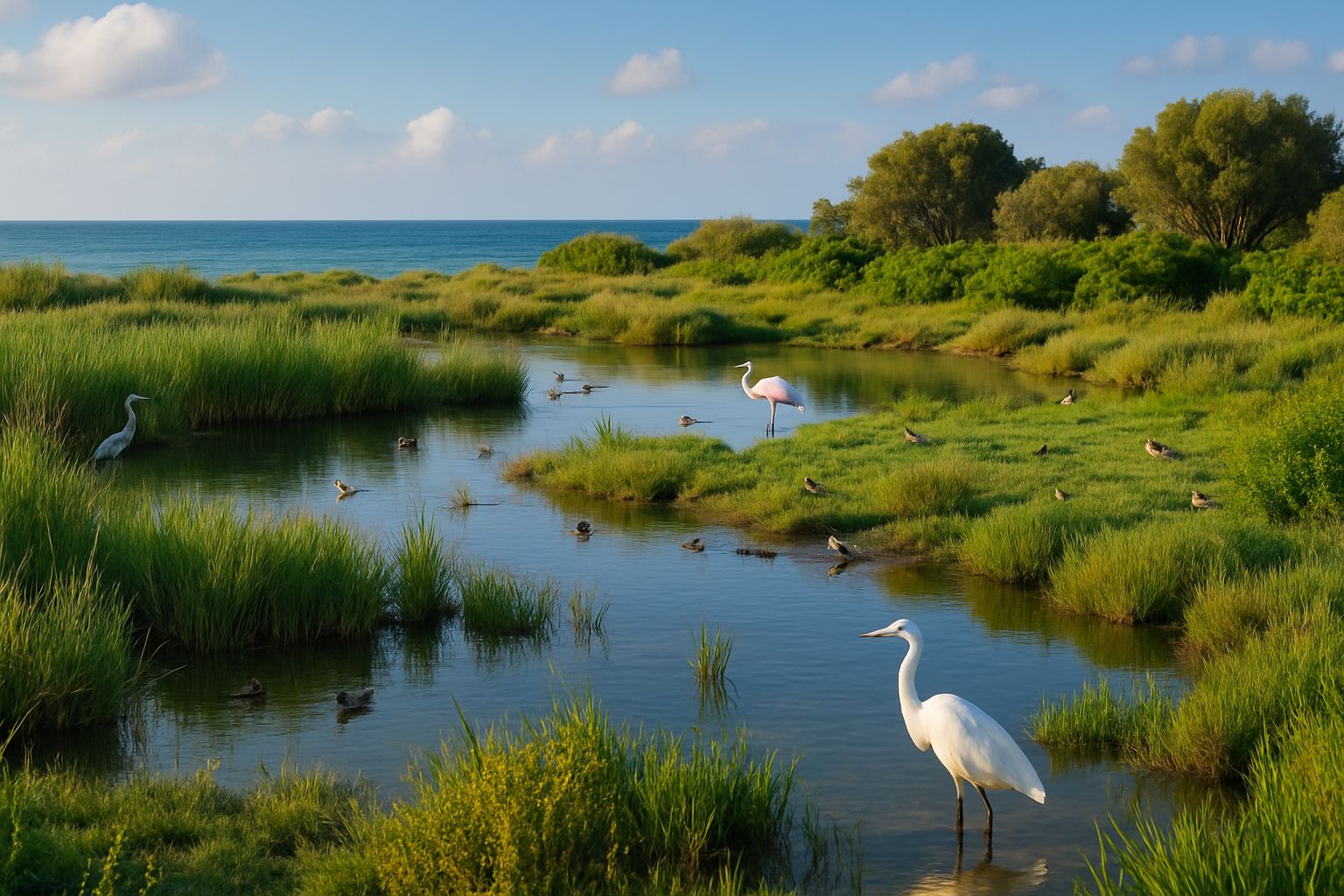
For those who crave the tranquil embrace of nature, Cyprus' coastal wetlands offer a remarkable sanctuary. This Mediterranean island, renowned for its sun-drenched beaches and ancient ruins, harbours an often-overlooked ecological treasure: its wetlands. These vibrant ecosystems, teeming with life, are crucial not only for wildlife but also for the health and sustainability of Cyprus itself.
The largest is the Akrotiri Salt Lake, south-west of Limassol. At 10.65 square kilometres it is the biggest inland body of water in Cyprus: a seasonal, rain-fed lake that was once a lagoon and has been cut off from the sea over the last three centuries. Together with the freshwater Fassouri marshes to its north-east, it forms the Akrotiri wetland complex, a Ramsar Wetland of International Importance since 2003, inside the British Western Sovereign Base Area. BirdLife International estimates that between 2,000 and 20,000 greater flamingos spend the winter on the lake, mostly between November and March, with numbers usually highest from December to February.
Flamingos are only the headline act. Cyprus lies on a major migration route between Europe, Asia and Africa, and BirdLife Cyprus rates the Akrotiri peninsula the most important wetland Important Bird Area on the island, with 300 bird species recorded. A eucalyptus forest along the lake's northern side is an important roost for birds of prey, while the grazing marsh and reedbeds of Fassouri feed water into the salt lake itself. The best place to take it all in is the Akrotiri Environmental Education Centre in Akrotiri village, about 14 km from Limassol, where the wildlife observation area looks straight over the lake and telescopes and binoculars are provided. Entry is free and it opens on weekday mornings; published weekend hours differ between sources, so ring +357 25 826562 before a weekend visit.
Why Coastal Wetlands Matter
Wetland habitats like these are scarce on a dry island, and they carry human history as well as wildlife. Larnaca Salt Lake was worked for salt for centuries, with donkeys carrying away the crust left behind when the lakes dried out in summer, until rising costs ended extraction in 1986 and imported salt took its place. Today the lake is protected as a Ramsar site (since 2001), a Natura 2000 site and an Important Bird Area.
They are also under pressure. BirdLife Cyprus has long warned about development around the Akrotiri peninsula, and it describes Paralimni Lake, a seasonal wetland in the Famagusta district and a Natura 2000 site since 2009, as probably the most degraded wetland on the island, citing unregulated draining, a shooting range, a motocross track and illegal trapping. Every year there are calls to drain Paralimni to control mosquitoes, even though the lake's native killifish feed on mosquito larvae.
There is good news too. At Oroklini Lake near Larnaca, an EU LIFE project run from 2012 to 2014 by the Game and Fauna Service, BirdLife Cyprus, the Department of Environment, the Department of Forests and the Voroklini Community Council fenced the wetland, managed its water levels, built nesting islands and added a birdwatching hide.
Exploring the Wetlands
Larnaca Salt Lake is the easiest to reach, on the western edge of Larnaca just off the road to the airport. It is a complex of four lakes, Aliki (the largest), Orphani, Soros and Spiro, and in winter it holds between 2,000 and 12,000 flamingos, which feed on brine shrimp. The Hala Sultan Tekke stands on its west bank, and the arches of the Kamares Aqueduct, built in the mid-18th century by the Ottoman governor Bekir Pasha to carry water into Larnaca, are a short drive away on the road towards Limassol.
About 9 km north of Larnaca, Oroklini Lake (also known as Voroklini Lake) is a brackish wetland of only 38 hectares, yet it is the best nesting site in Cyprus for the black-winged stilt and an important one for the spur-winged lapwing, a bird for which Cyprus holds more than half of the EU breeding population. An information kiosk with an observation platform overlooks the northern part, and a birdwatching hide on the southern side, with parking beside it, looks over the larger, saltier section.
In the east of the island, Paralimni Lake fills after the winter rains and shrinks or dries out in the summer heat. It is the most important remaining stronghold of the endemic Cyprus grass snake, one of Europe's rarest snakes, and at least 186 bird species have been recorded there, with spur-winged lapwings among the breeding birds. Go in winter or spring, when there is water, and keep to the existing tracks.
If you would rather go with experts, BirdLife Cyprus runs field trips that are open to non-members, at 10 euros per person (free for members and children under 12), and booking is required. The next wetland outing is at the Larnaca Sewage Works hide and salt lakes on Saturday 12 December 2026 at 09:00, meeting on the salt lake side of the main road opposite the Yialos holiday village entrance.
The coastal wetlands of Cyprus are a vital part of the island's ecological fabric, offering refuge to wildlife and benefits to humans alike. As these ecosystems face increasing pressures, it has never been more crucial to visit, understand and support their preservation. Whether you're a nature lover, a conservation enthusiast or simply a curious traveller, exploring these wetlands can be both enlightening and rewarding.
For those considering making Cyprus their home, understanding its natural landscapes can significantly enrich your experience. If you seek relocation help, Cyprus Decoded is here to assist with insights and practical guidance as you embark on this exciting journey.
