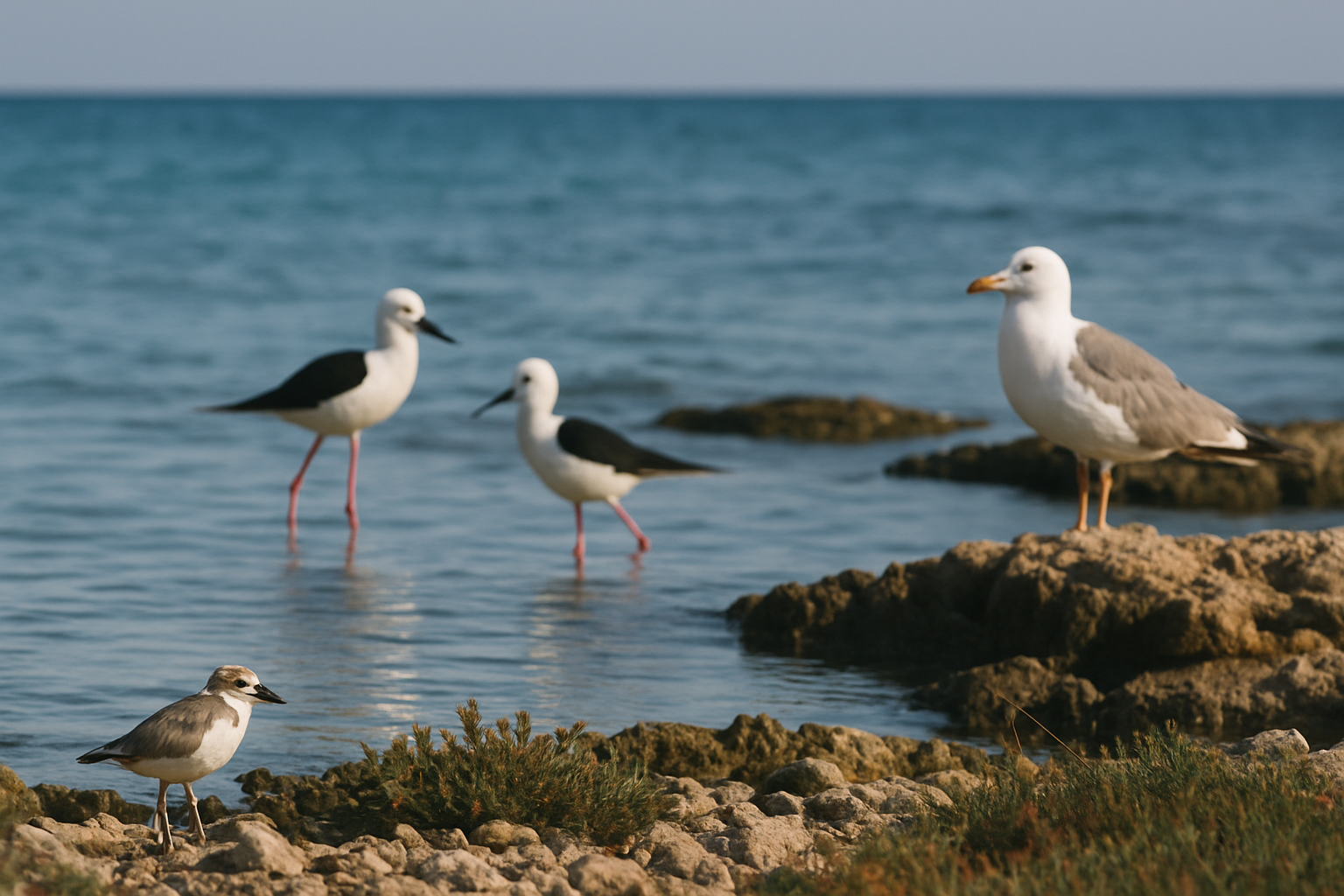
In the heart of the Eastern Mediterranean lies Cyprus, an island where history and nature intertwine, offering visitors a unique blend of culture and wildlife. For birdwatching enthusiasts, Cyprus is a veritable paradise. Its strategic location on the migratory path between Europe, Asia, and Africa means it hosts a plethora of bird species, some native and some just passing through. The island's diverse coastal habitats provide perfect spots for birdwatching, where the sunlit skies and the gentle lap of waves create a serene backdrop for the avian spectacle.
The Akrotiri Peninsula is a must-visit for any birdwatcher. Its salt lake, the largest inland body of water in Cyprus, holds thousands of wintering flamingos from about November to March, and birdwatchers can also spot black-winged stilts, avocets and a variety of ducks. The Akrotiri Environmental Education Centre in Akrotiri village overlooks the lake, with telescopes and binoculars in its observation area. In late summer, look up at the sea cliffs: Eleonora's falcons breed at Akrotiri and Episkopi, two of the island's three colonies (the third is at Cape Aspro), nesting in August and September.
Further along the coast, the Larnaca Salt Lake draws birdwatchers for similar reasons. This area is one of the most important wetlands in Cyprus and has been designated a Ramsar site, indicating its global significance for biodiversity. Here, bird enthusiasts can witness the spectacle of migrating waders and waterfowl. During the winter months the lake holds between 2,000 and 12,000 flamingos, and herons and egrets feed around its edges. Our guide to Cyprus' coastal wetlands covers Oroklini and Paralimni lakes too.
For a quieter morning, the Paphos headland around the lighthouse and the archaeological park is a classic stopover for migrant birds. In spring and autumn its scrub and short turf can hold warblers, wheatears, pipits, larks, shrikes and flycatchers, and a boardwalk runs along the shore. The most recent BirdLife Cyprus walk there was on Saturday 10 October 2026. The next BirdLife Cyprus outing in Paphos district is on Saturday 14 November 2026 at 09:00, at Mandria, Asprokremmos Dam and Ayia Varvara, meeting at Lark Corner on the coastal track opposite the rocky islands. Check the BirdLife Cyprus events page before going: its foot-and-mouth notice warns that sites near livestock, Ayia Varvara among them, may be temporarily closed.
On the eastern side of the island, Cape Greco is as good for birds as it is for views. BirdLife International lists the headland as an Important Bird Area because it is a migration bottleneck: red-footed falcons, pallid harriers, honey buzzards and kestrels funnel over it, and its scrub holds breeding Cyprus wheatears and Cyprus warblers, two birds that nest nowhere else, along with black francolins. The national forest park's marked trails, such as the Aphrodite trail, are the easiest way in.
The Karpas Peninsula, the long finger at the island's north-east tip, is in the Turkish-occupied north, so a visit means crossing at one of the official checkpoints with a passport or ID. BirdLife Cyprus counts it, like Akamas at the other end of the island, among the migration bottlenecks where birds rest and refuel after the sea crossing. Off Cape Apostolos Andreas, the Kleides islets hold the world's easternmost breeding colony of Audouin's gull, a small and declining one, alongside yellow-legged gulls and Mediterranean shags. BirdLife Cyprus and the Turkish Cypriot bird protection society KUŞKOR have counted the colony by boat every May since 2007, and landing on the islets is now prohibited to protect it.
Several of these sites are protected. Larnaca Salt Lake has been a Ramsar wetland of international importance since 2001 and Akrotiri Salt Lake since 2003, and Cape Greco is a national forest park, though BirdLife International notes that the migrants there are still threatened by illegal trapping.
Whether you're planning a dedicated birdwatching trip or simply wish to explore the natural beauty Cyprus has to offer, the island's coastal birdwatching sites promise an unforgettable experience. With its mix of migratory and resident species, stunning landscapes, and commitment to conservation, Cyprus invites you to discover its feathered gems. For those considering a more permanent connection to the island, our team at Cyprus Decoded can provide relocation help to make Cyprus your home, allowing you to enjoy its natural wonders year-round.
