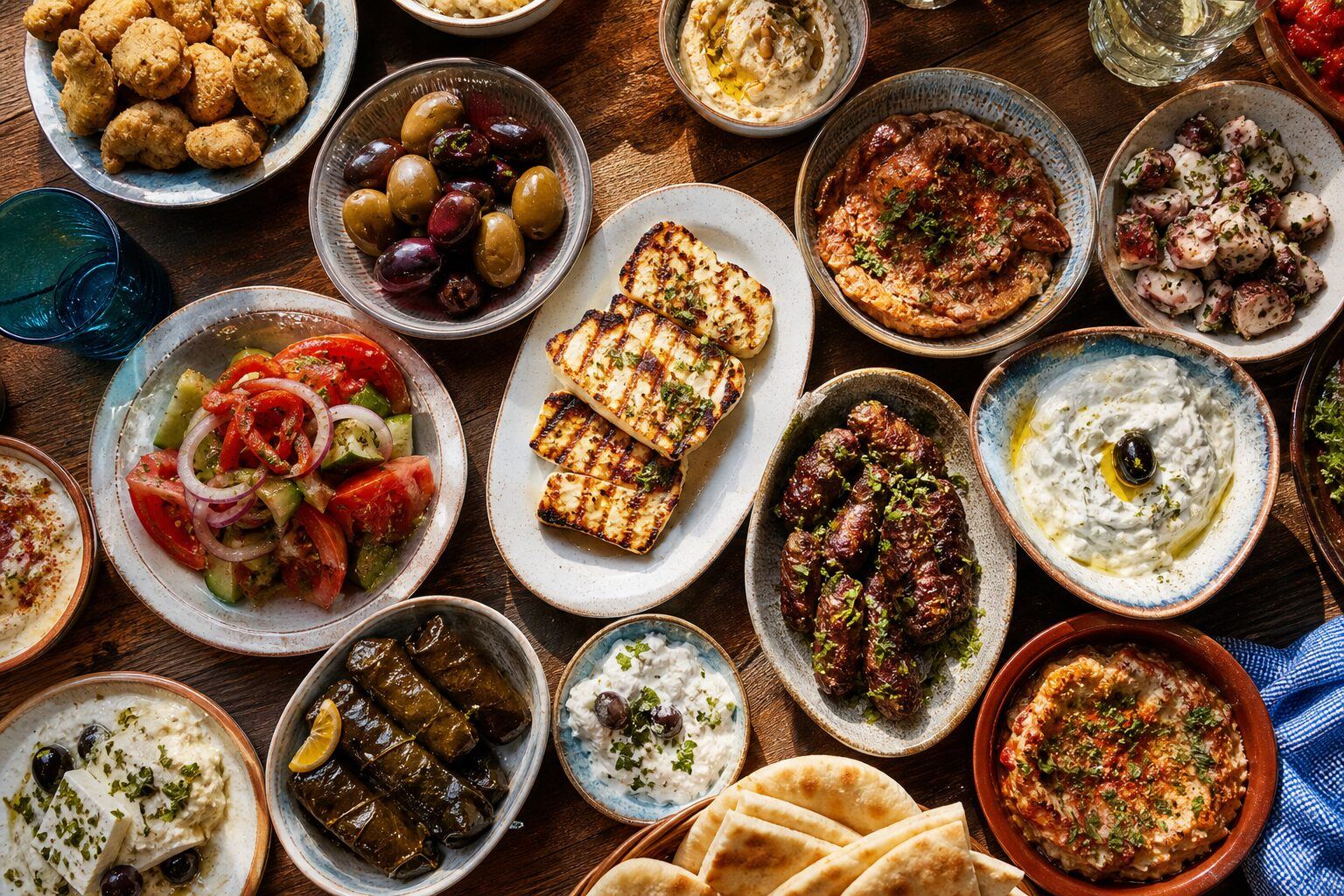
Cyprus does food memory better than almost anywhere in the Mediterranean. Recipes here have been passed down through village kitchens for centuries, shaped by Greek, Turkish, Levantine and Venetian hands, and the best of it never made it onto laminated tourist menus. If you only have a week on the island, these are the six things worth planning your days around.
1. Halloumi, but the real one
You have eaten halloumi at home. You have not eaten this. Fresh Cypriot halloumi is made from sheep and goat milk, folded around dried mint, and it is softer, saltier and far more interesting than the rubbery vacuum-packed blocks sold abroad. Since 2021 the name has Protected Designation of Origin status, so the genuine article must be made in Cyprus with the milk majority coming from sheep and goats. Try it three ways while you are here: fresh and raw from a village producer, grilled until it squeaks, and the summer classic, cold slabs of it with sweet watermelon. That last combination sounds odd and is completely correct.
2. Souvla
Not souvlaki. Souvla. The difference matters to every Cypriot you will ever meet. Souvlaki is small cubes cooked fast; souvla is big generous hunks of pork, lamb or chicken threaded onto a long skewer and turned slowly over charcoal for over an hour, a foukou barbecue doing the work while the family argues about football nearby. The outside crisps, the fat renders, the inside stays juicy. It is the centrepiece of Easter and of practically every Sunday lunch on the island. If a Cypriot invites you to a souvla, cancel whatever else you had planned.
3. Kleftiko
The name means stolen, from the tale of sheep thieves who cooked their contraband in sealed underground pits so no smoke would give them away. Today kleftiko is lamb slow-baked for hours in a sealed clay oven with lemon, bay and oregano until the meat gives up and slides off the bone. It arrives at the table as a soft, fragrant heap that needs no knife. Village tavernas do it best, and many only make it on certain days, so ask ahead. When you find a good one, order it every time.
4. A full Cyprus meze
The meze is not a meal, it is an event. Twenty or more small dishes arrive in waves: olives, tahini and taramasalata first, then halloumi and lountza, village salad, grilled vegetables, snails if you are lucky, and finally a parade of grilled meats or fish depending on which meze you chose. Two rules from experience. First, do not eat lunch that day. Second, pace yourself in the opening rounds, because the kitchen is playing a long game and the best dishes arrive last. Book ahead at a proper taverna and give it a whole evening.
5. Loukoumades
Golden doughnut balls, fried to order, drenched in honey syrup and dusted with cinnamon, served too hot to eat and eaten anyway. Loukoumades are festival food, street food and midnight food all at once. The best ones come from small street stalls and festival vans where the batter goes into the oil the moment you order, not from restaurant dessert menus where they have been sitting under a heat lamp. If you smell hot honey and cinnamon at a village festival, follow your nose and take cash.
6. Commandaria
Finish with a glass of history. Commandaria is widely regarded as the world's oldest named wine still in production, made from sun-dried Xynisteri and Mavro grapes in fourteen designated villages on the southern slopes of the Troodos, just north of Limassol. It is sweet, dark and amber-rich, somewhere between a dessert wine and a story. Crusader knights served it at royal weddings in the twelfth century, and today it arrives at your table as a digestif, often on the house at the end of a good meal. Buy a proper bottle from a winery in the Commandaria region rather than the airport, and you take a small piece of eight hundred years home with you.
How to eat all six without wasting a meal
The pattern is simple: villages beat resorts. The further you get from a hotel strip, the better the food gets and the less it costs. A working formula for a short trip: one long taverna meze evening, one Sunday souvla or a taverna that grills over real charcoal, one village lunch built around kleftiko, halloumi in some form every single day because it belongs in everything, loukoumades whenever a festival or street stall crosses your path, and Commandaria as the closing note. Eat like that for a week and you will understand the island better than any museum could manage.
