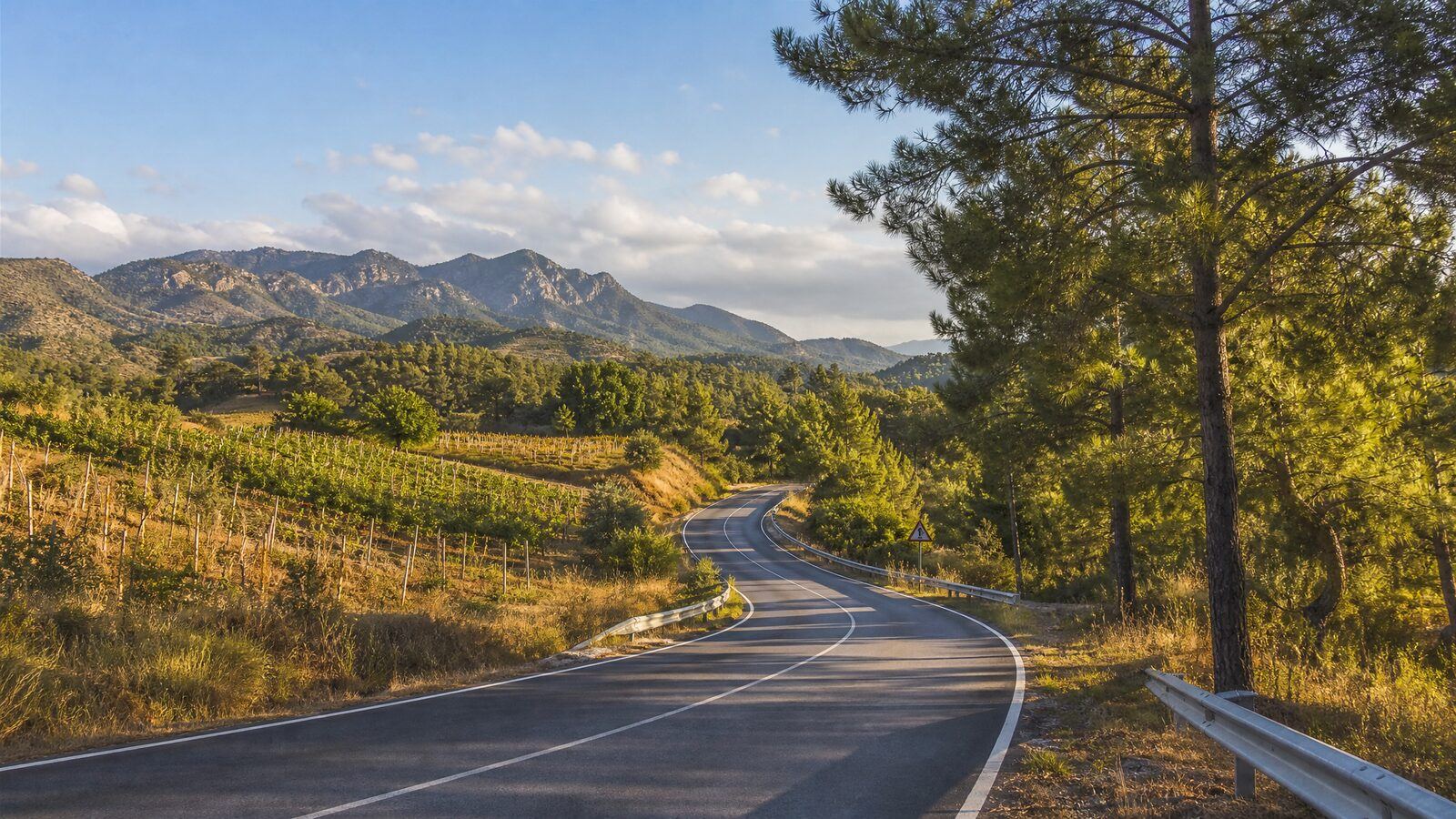
There are two ways to get from Paphos up to the Troodos mountains. One is efficient. The other is the reason you have a car in Cyprus at all. The efficient way is to point at the A6 motorway towards Limassol and then climb up from the coast, all smooth tarmac and predictable timing. It works. It is also a bit dull, and it skips the entire point of the journey, which is the journey.
Take the inland road
Instead, head inland and north out of Paphos and let the road wind up through the foothills, picking up the B8, the old mountain road that threads through the wine villages and pine forest before delivering you to the high villages of Platres and on towards Troodos square. This is not a fast road. It is a sequence of switchbacks, blind bends and gradients, and it asks you to actually drive. In return it gives you forest, gorges, stone villages and views that the motorway never sees. Allow around three hours with stops, more if you have any sense, because the stops are the whole idea.
Where to stop
Omodos
If you only stop once, stop in Omodos. It is the postcard wine village: a cobbled square, a big monastery at its centre, lace and zivania for sale in the lanes, and tavernas that have been feeding visitors for generations. It is touristy, yes, but earned. Have a coffee in the square, buy something from a producer rather than a shop, and stretch your legs before the next climb.
Platres
Higher up, Pano Platres is the classic mountain resort village, cool in summer when the coast is baking, with the Caledonia waterfall trail nearby for anyone who wants to walk off lunch. It has been a hill retreat for over a century and still feels like one. This is the natural place to break before the final push to the top.
The smaller villages
Between the named stops are the ones nobody writes about, and they are often the best. A taverna with four tables and a grandmother cooking. A tiny Byzantine church, several of which in this range carry UNESCO World Heritage status for their painted interiors. A roadside spring. Build in the slack to pull over when something looks good, because the unplanned stop is usually the one you remember.
The practical warnings
- The road is genuinely twisty. If anyone in the car gets carsick, this is the route that does it. Front seat, fresh air, no reading.
- Fuel up before you leave the coast. Stations thin out fast in the hills, and you do not want to be hunting for one on fumes near the top.
- Mind the weather. Troodos is properly high. It holds snow in winter, it can be ten degrees cooler than Paphos, and cloud rolls in quickly. Bring a layer even if you left the coast in shorts.
- Drive to the conditions. Locals know the bends and will be on your bumper. Use the pull-ins to let them past rather than rushing the corners. There is no prize for arriving tense.
- Go in the morning. Light is better, the road is quieter, and you leave room for the inevitable extra stop without driving the final descent in the dark.
The way back
Here is the honest compromise. Drive up the long way, in the morning, with all the stops. Then, if you are tired or the light is going, come back down via the faster motorway route to the coast. You get the great drive when you are fresh and the easy drive when you are not. Best of both, and nobody arrives home white-knuckled.
The mountain road is slower, fiddlier and occasionally nerve-testing. It is also the single best day's driving on the island, and the difference between seeing Troodos and getting to Troodos. Take the long way.
