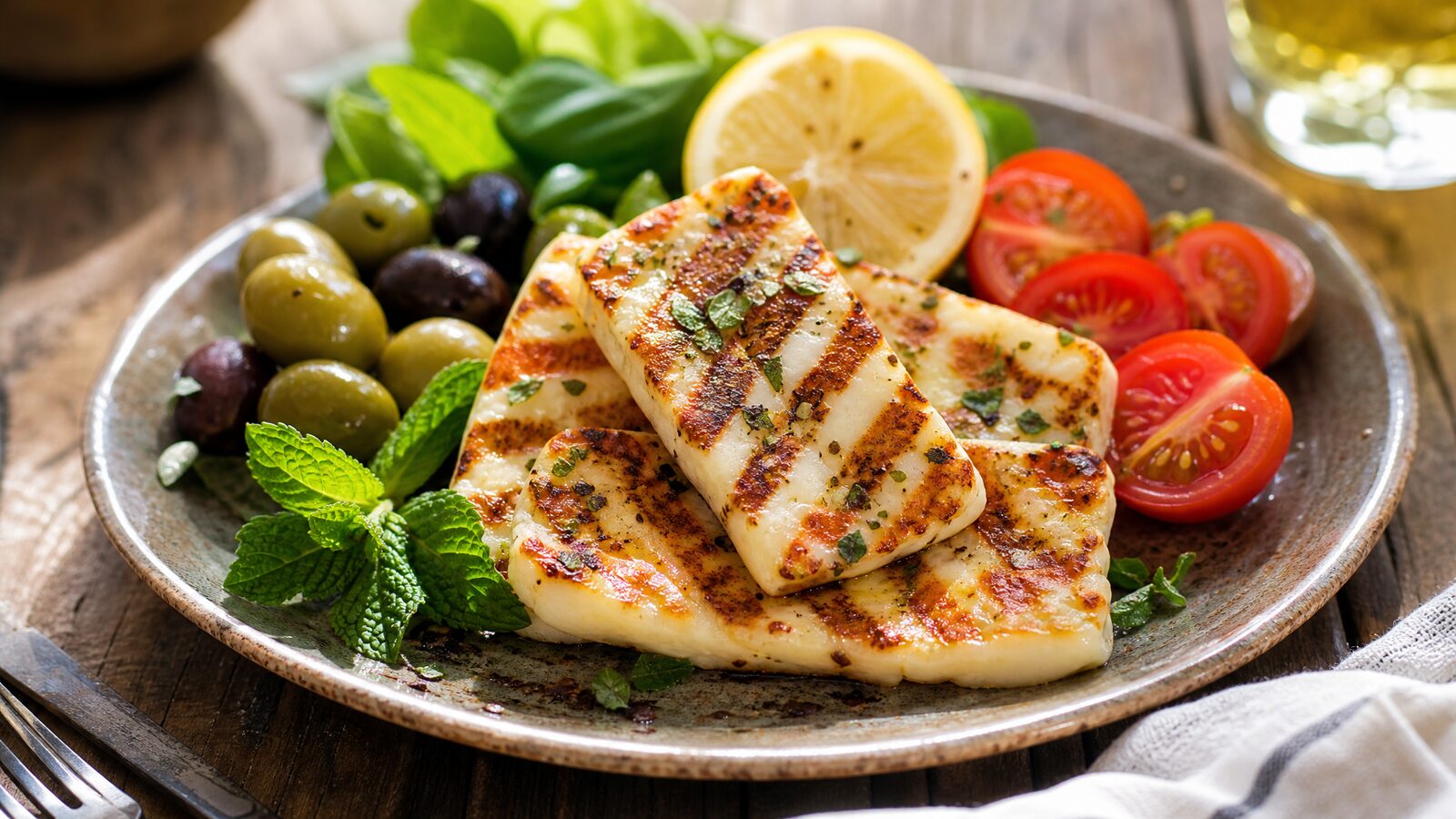
Halloumi has been a protected name since 2021. It carries Protected Designation of Origin status across the EU, which means the word is not a generic description of squeaky grilling cheese. It is a legal claim about where the cheese was made and what went into it. The rule is simple on paper: real halloumi is made in Cyprus, and the milk has to be majority sheep or goat, with at least 51 per cent of the mix coming from those two animals rather than cow.
That second part is the bit nearly everyone gets wrong, including some producers who absolutely know better. For decades a lot of commercial halloumi quietly drifted towards mostly cow milk, because cow milk is cheaper and easier to produce at scale. The PDO file was meant to drag the cheese back to its traditional recipe. The transition has been messy, the deadlines have shifted, and that mess is exactly the gap the fakes live in.
What the law actually says
The protected specification sets three things that matter to you as a shopper. First, geography: the cheese must be produced on the island. Second, milk: it must be a blend of sheep and goat milk, optionally with cow milk, but the sheep and goat share has to be more than half. Third, the name: only cheese meeting those conditions may legally be sold as halloumi or its Greek-Cypriot spelling, hellim, inside the EU.
So the test is not really about taste, which can be faked with salt and texture. It is about provenance. A block produced in a factory in northern Europe from 100 per cent cow milk is, legally, not halloumi. It might be labelled grilling cheese, or Cyprus-style cheese, or given an invented brand name that sounds vaguely Mediterranean. None of those are the protected term, and that is deliberate.
The label cues that give it away
You do not need to be an expert. You need to read two lines on the back of the pack.
- Country of origin. Real halloumi says made in Cyprus, or product of Cyprus. If the origin is the Netherlands, Germany, the UK or anywhere else, it is not halloumi no matter what the front says.
- The milk list. Look at the ingredients in order. Real halloumi lists sheep milk and goat milk before, or instead of, cow milk. If the first and only milk listed is pasteurised cow milk, walk away.
- The exact word. If the front of the pack avoids the word halloumi and instead says grilling cheese, squeaky cheese, or barbecue cheese, that avoidance is the tell. Brands that can use the protected name do use it, because it sells.
- The PDO mark. Genuine product increasingly carries the EU PDO logo, a red and yellow circle of stars. It is not yet on every legitimate pack, so its absence is not proof of a fake, but its presence is a good sign.
Why the fakes keep coming back
Demand. Halloumi went from a regional specialty to a global staple in about a decade, driven by vegetarians who wanted something that holds up on a grill. Production on a small island cannot magic itself larger overnight, and the milk supply, particularly sheep and goat, is genuinely constrained. When demand outruns supply, two things happen: prices rise, and imitators flood in to undercut them. Both are happening now.
There is also an ongoing tug of war over the recipe itself. Some large producers have pushed to keep the cow milk share higher for longer, arguing the island cannot produce enough sheep and goat milk to meet demand. The honest summary is that the exact required ratio and its enforcement timeline have been a moving target, so if you want to be certain about the current legal percentage on a given day, check the latest published PDO specification rather than trusting a label slogan.
What to actually buy
In Cyprus, buy from a village producer or a proper deli counter if you can. Fresh halloumi here is softer, saltier and folded with dried mint, and it is a different food from the rubbery vacuum blocks sold abroad. If you are shopping in a supermarket, anywhere, the rule holds: Cyprus origin, sheep and goat milk leading the ingredients, the actual word halloumi on the front. Get those three and you are fine. Miss any one of them and you are paying premium money for grilling cheese wearing a costume.
None of this is snobbery. It is just that the real thing is better, the people who make it properly are the ones the protected name is meant to defend, and the fakes are betting you will not turn the pack over. Turn the pack over.
