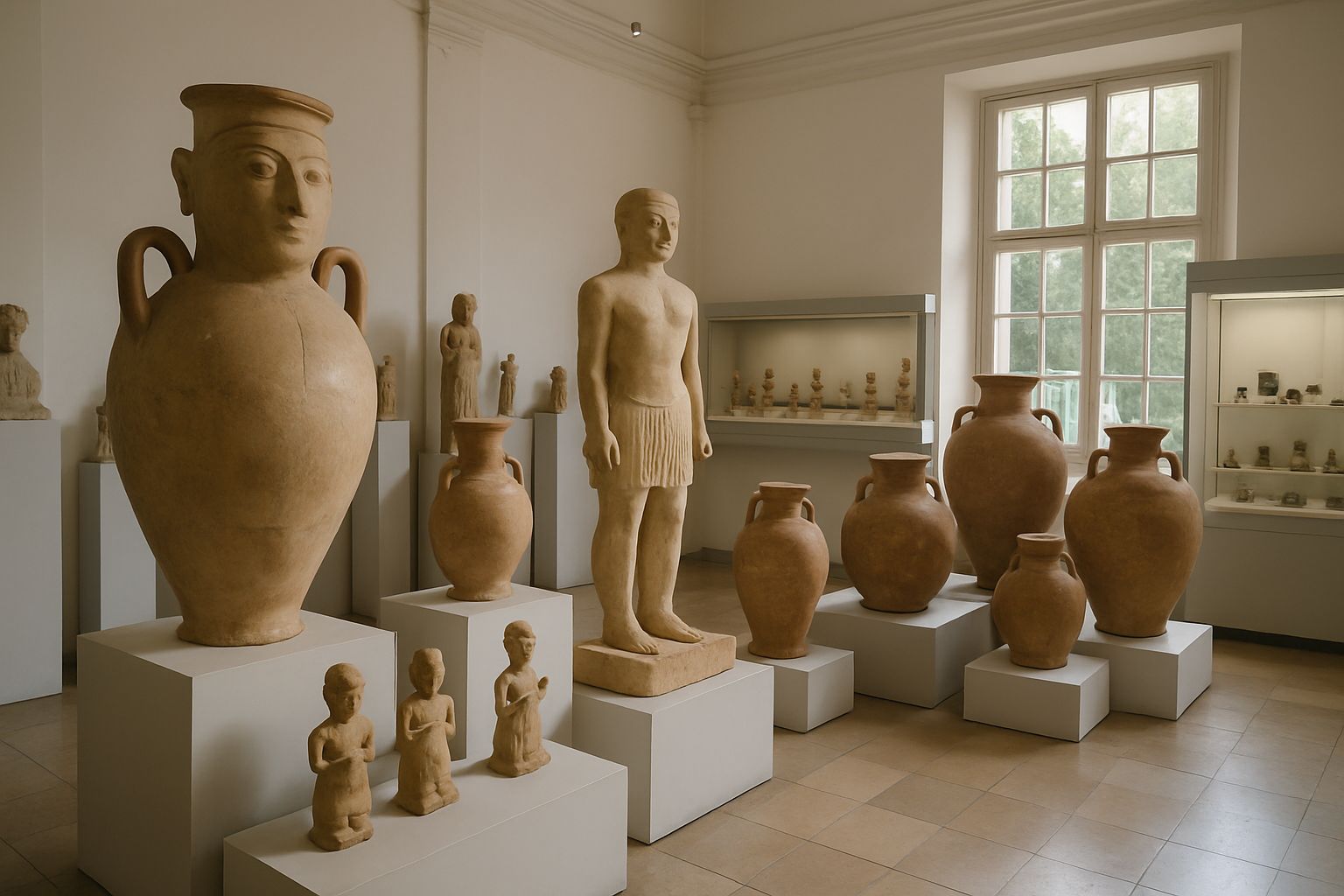
Cyprus, a sun-drenched island in the eastern Mediterranean, is a treasure trove of history and culture, with its roots deep in ancient civilisations. For history enthusiasts, the best single introduction to that past is the Cyprus Museum in Nicosia, often called the Cyprus Archaeological Museum, where the island's story runs from its first Neolithic villages to early Byzantine times. Whether you are a seasoned archaeologist or a curious traveller, you get the whole sweep of Cypriot history under one roof.
Founded in 1882, the Cyprus Museum is the island's oldest and largest archaeological museum, run by the Department of Antiquities. Its present building, just outside the Venetian walls near Paphos Gate, was begun in 1908 in memory of Queen Victoria, when Cyprus was under British rule. Fourteen rooms, arranged by period and by theme, take you from the Neolithic to the early Byzantine period of the 7th century AD.
Pottery is one of the museum's great strengths. Room 2 is devoted to the Early Bronze Age, roughly 2500 to 1900 BC, and most of its vessels come from the cemeteries of Vounous, near Bellapais in the occupied Kyrenia district: Red Polished ware with a glossy red surface and incised linear patterns. The centrepiece is a clay model of a circular open-air sanctuary, with figures gathered inside, bulls in pens and snakes on the walls, shown beside a clay model of a ploughing scene from around 2000 BC. Room 3 then follows Cypriot pottery from the Middle Bronze Age to the end of Roman times.
Room 4 is the one most visitors remember. It holds the terracotta votive figures from the Archaic sanctuary of Agia Irini, displayed as they were found, ranged around an altar: riders, chariots, bulls and centaurs. The Swedish Cyprus Expedition excavated the sanctuary in 1929, and about half of the roughly 2,000 objects it found are now in Stockholm. Sculpture continues in Room 5, with Archaic limestone kouroi, the lions and sphinxes found in 1997 at the royal tombs of Tamassos and the marble Aphrodite of Soloi from the 1st century BC, and in Room 6, where the larger than life-size bronze of the Roman emperor Septimius Severus, found by chance near Kythrea in 1928, is the largest bronze statue ever found on the island.
Room 7 gathers the smaller treasures: bronze tripods and stands, the bronze Horned God from Enkomi, seals, coins of the ancient Cypriot kingdoms and gold jewellery from the Middle Bronze Age to early Christian times. Room 11 holds the finds from the royal tombs of Salamis: a wooden bed and a throne decorated with ivory, a bronze cauldron ringed with griffin and sphinx heads, and chariot fittings from the tomb passages, where the king's horses were sacrificed to go with him into the afterlife. Room 13 adds marble statues from the gymnasium and theatre of Salamis. Salamis itself lies near Famagusta in the Turkish occupied north, so a visit means crossing at one of the official checkpoints with your passport or ID.
Room 10 is given over to writing. The oldest writing yet found on Cyprus, part of a clay tablet from Enkomi dated to around 1500 BC, sits alongside inscriptions in the Cypriot syllabary and a copy of the bronze tablet of Idalion, whose original is in the National Library in Paris. Dating from the early 5th century BC, it records a contract in which King Stasikypros and the city of Idalion promised land or money to the physician Onasilos and his brothers for treating the war wounded free of charge. Room 12 tells the story of Cypriot copper mining and smelting, down to a copper ingot of about 39 kilos used in the island's ancient trade.
About ten minutes' walk away, inside the walls at 15 to 17 Ippokratous Street in Laiki Geitonia, the Leventis Municipal Museum tells the story of Nicosia itself, from ancient times through the Byzantine, Frankish, Venetian, Ottoman and British periods to the Republic of Cyprus and the city today. It opened in April 1989 and won the European Museum of the Year Award in 1991. Entry is free, and it opens Tuesday to Sunday from 10:00 to 16:30, closed on Mondays and public holidays.
The Cyprus Museum opens Tuesday to Friday from 08:00 to 18:00, Saturday from 09:00 to 17:00 and Sunday from 10:00 to 13:00, stays open until 20:00 on the first Wednesday of every month and is closed on Mondays. Entrance is free. Whether you are considering a brief visit or thinking about making Cyprus your home, these glimpses into the past offer a profound connection to the island's enduring legacy. Should you decide to extend your stay, our relocation help can ease your transition, allowing you to explore Cyprus's many historical treasures at your leisure.
