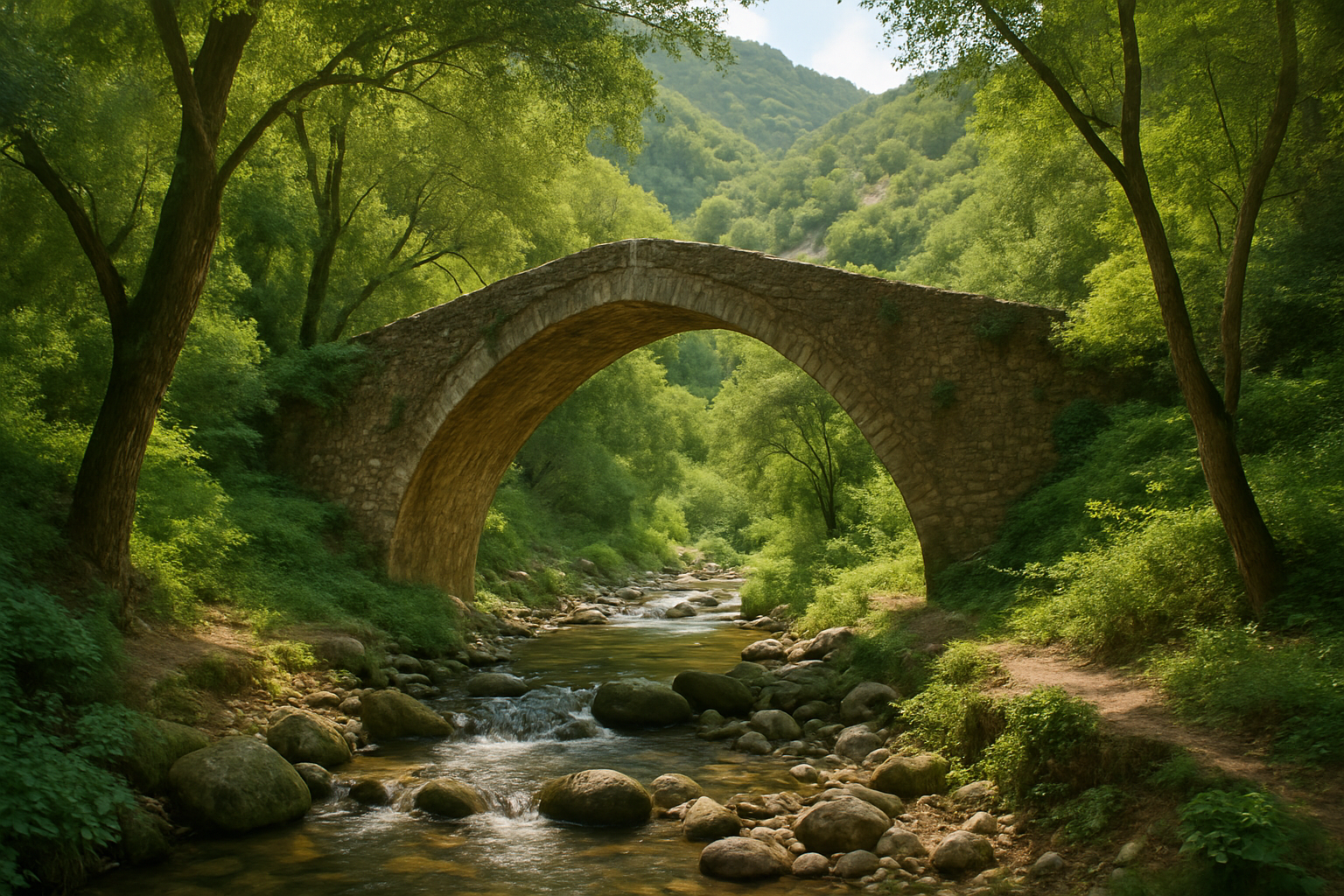
Cyprus, an island steeped in history and mystery, is dotted with remnants of its storied past. Among these treasures are the medieval bridges, stone crossings that whisper tales of bygone eras. Tucked away in the island's lush countryside, these architectural marvels are often overlooked in favour of sun-drenched beaches and bustling cities. However, those who venture off the beaten path will find themselves enveloped in the quiet elegance and historical significance of these forgotten crossings.
Deep within the Paphos Forest, spanning the Diarizos River, stands the Tzelefos Bridge, also known as Kelefos. It is the largest and best known of the island's Venetian bridges, a single stone arch roughly thirty metres long that seems to have slipped through the cracks of time. Built during the Venetian period, when camel caravans carried copper and goods across the forest towards the coast, it is a testament to the craftsmanship of the age. Today it stands as a silent sentinel, its stones worn smooth by centuries of passage, and it is the easiest of the three to reach by car.
Further into the forest, near the abandoned village of Vretsia, lies the Roudia Bridge. Smaller and far more secluded than Tzelefos, it is reached along a rough dirt track and rewards the effort with a real sense of discovery. Legend has it that the bridge was used by pilgrims journeying to and from the monasteries scattered across the Troodos Mountains, and the trade route it once served linked the copper mines of the interior with the harbours of the south. Though the caravans have long since vanished, the bridge remains a favourite amongst hikers and history enthusiasts who make the journey.
The third of the trio, the Elia Bridge, sits at the point where the streams of Kaminaria and Diarizos meet, and takes its name from the olive trees that once grew around it. Often shrouded in mist during the early hours, it is the most intimate of the three, a modest arch tucked into a green fold of the valley. All three bridges are linked by the Venetian Bridges nature trail, a roughly twenty kilometre route that runs from Vretsia to Kaminaria, letting walkers trace the old caravan road from one crossing to the next.
Exploring these bridges is more than just a journey through Cyprus' physical landscape; it is a journey through its cultural tapestry. Each bridge has its own story, woven into the fabric of the communities that depended on them. Walking across the cool, moss-covered stones, it's easy to imagine the stories of those who have trodden before: weary merchants, devoted pilgrims, and perhaps even a hidden romantic encounter or two.
Reaching these hidden gems requires a spirit of adventure and a reliable map. The roads can be winding and narrow, with signs that hint at their presence but do not overtly advertise. The best time to visit is during spring or autumn when the landscape is vibrant, and the weather is mild. Many of these sites are accessible via well-marked hiking trails that offer not only a glimpse of these medieval structures but also breathtaking views of Cyprus' rugged beauty.
For those considering a longer stay or permanent move to Cyprus, these bridges serve as a reminder of the rich history that awaits exploration beyond the typical tourist path. Incorporating these historical sites into your new life on the island can enrich your understanding and appreciation of its multifaceted heritage. Cyprus offers a unique blend of the old and the new, making it an ideal location for history enthusiasts and those seeking a slower pace of life.
As you plan your visit or potential relocation, remember that Cyprus Decoded is here to assist with all your relocation help. Whether you are tracing the footsteps of medieval merchants or simply enjoying the serene landscapes, the island's forgotten bridges are sure to add a touch of enchantment to your journey. So step off the beaten track, and let the medieval bridges of Cyprus guide you through a world where history and legend are forever entwined.
