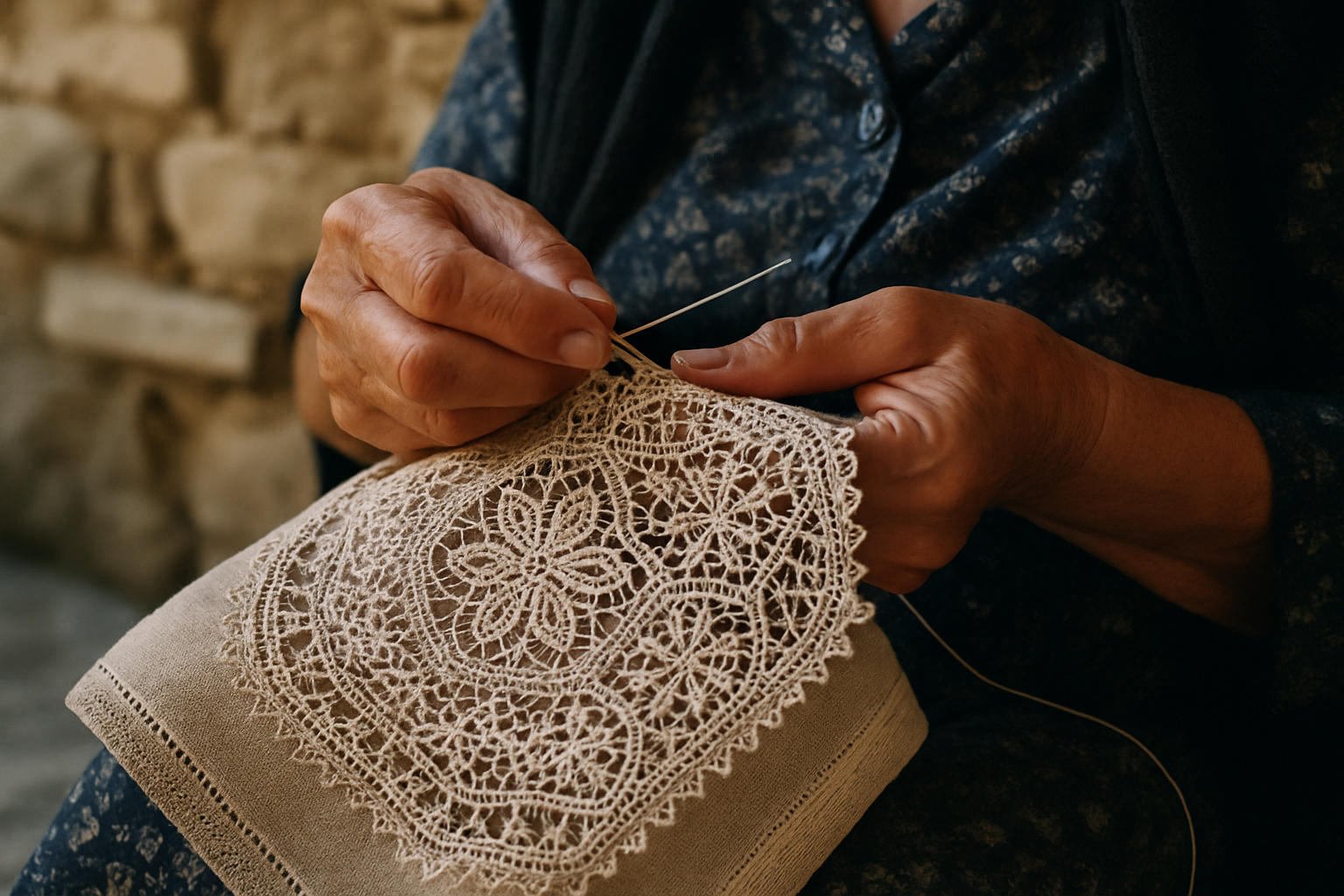
As you wander through the sun-soaked landscapes of Cyprus, a visit to the traditional lace-making villages offers a glimpse into a timeless craft that has been cherished for centuries. The village of Lefkara, nestled in the Troodos Mountains, is particularly renowned for its intricate lace work, known simply as 'Lefkaritika'. This delicate art form, which gained international fame when Leonardo da Vinci purportedly acquired a piece for the altar cloth of Milan's Duomo, remains a vibrant testament to the island's rich cultural tapestry.
The streets of Lefkara weave through a picturesque tableau of stone houses, each adorned with vibrant bougainvillea and wooden shutters. As you stroll past the cobbled lanes, you will likely find women sitting in the shade, skillfully working on intricate patterns passed down through generations. The practice of lace-making here is a family affair, with skills often taught from mother to daughter, ensuring that each piece carries the personal touch and history of its creator.
When visiting Cyprus, taking the opportunity to engage with the local artisans is both a cultural and personal experience. These craftsmen are often eager to share their stories and demonstrate their artistry, allowing visitors to appreciate the immense skill and patience required to produce such fine lace. The lace from Lefkara is unique in its composition: worked on linen with cotton or silk thread, it combines hemstitching, cutwork, satin stitch fillings and needlepoint edgings, a blend of techniques that has captured admirers worldwide and earned Lefkaritika a place on UNESCO's intangible cultural heritage list in 2009.
Aside from Lefkara, other villages like Kato Drys and Fyti also offer a chance to explore this rich textile tradition. Fyti, in particular, is famous for its 'Fythkiotika' weaving, which is distinct from Lefkara lace but equally rich in heritage. These textiles are known for their bold geometric patterns and vibrant colours, offering a different, yet complementary, insight into the island's artisan skills.
Beyond the aesthetic appeal, exploring these lace villages offers deeper insight into Cyprus's societal evolution. The craft of lace-making, once a vital economic activity for many families, has seen a revival as efforts to preserve cultural traditions gain momentum. Local workshops and museums now frequently host exhibitions and hands-on sessions for visitors who wish to learn more about these intricate crafts. As such, purchasing a piece of lace not only provides a beautiful souvenir but also supports the continuation of a cherished tradition.
If you plan to explore these villages, consider timing your visit to coincide with local festivals or events where the lace-making tradition takes centre stage. These gatherings offer an enhanced cultural experience, complete with traditional music, dance, and food, making for a memorable day out in the Cypriot countryside. Be sure to check local calendars for specific dates, as these events are subject to change from year to year.
For those considering a longer stay or even relocation to Cyprus, these villages represent the heart of Cypriot hospitality and tradition. The slower pace of life, combined with the welcoming nature of the local communities, offers an inviting alternative to the busier tourist hotspots on the island. Whether you are inspired by the tradition-rich environment, or simply looking to immerse yourself in a unique cultural setting, these villages provide a compelling reason to linger.
In visiting Cyprus's traditional lace villages, you open a door to both the past and the present of this remarkable island. The craftsmanship, the stories, and the hospitality of the villagers create an experience that is as enriching as it is enjoyable. To make the most of your journey, consider the practical aspects of travel and accommodation, and remember that Cyprus Decoded offers relocation help if you find yourself drawn to the idea of making this beautiful island your home.
