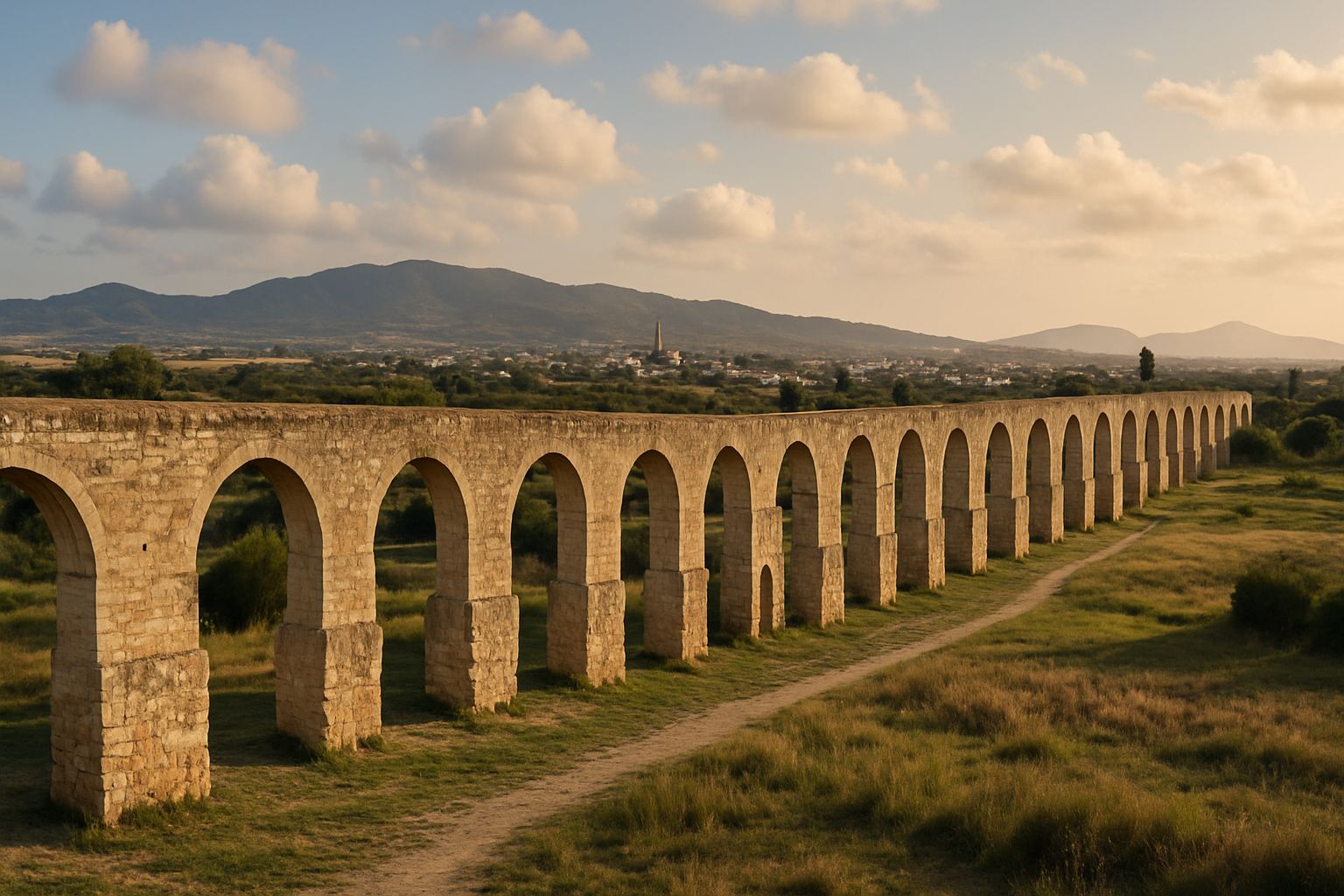
In the heart of the Mediterranean, Cyprus offers an intriguing blend of history and natural beauty. Among its hidden gems are the aqueducts that once kept its towns supplied, from the Roman pipelines of ancient Kourion to the 18th-century arches of Larnaca. These structures, once vital to sustaining life on the island, tell a fascinating story of ingenuity and adaptation in the face of a challenging climate.
Ancient Kourion, the clifftop city-kingdom in the Episkopi area of the Limassol District, had no springs on its own hill. In Roman times two aqueducts solved that, and both were pipelines built from terracotta sections. The western line brought water from perennial springs near Sotira, about 11 km away, and the larger eastern line came from Souni, about 20 km away. Joseph S. Last, who traced both routes, estimated some 30,000 pipes on the western line and almost 60,000 on the eastern one, and the western line also supplied the Sanctuary of Apollo Hylates, west of the city.
Before the pipes arrived, probably in the first century AD, the city relied on rainwater stored in bottle-shaped cisterns, and water from more distant springs was probably brought up by pack animals. Piped water made grander buildings possible. On the north-west side of the Roman agora stand an impressive public bath and the Nymphaeum, dedicated to the water nymphs, which in its grandest phase measured about 45 metres by 15 metres. A severe earthquake in 365 AD destroyed much of the city, and what you walk through today are its excavated remains.
Another noteworthy site is the Kamares Aqueduct on the western edge of Larnaca, on the road heading towards Limassol. Built in the Roman style, it is in fact Ottoman: the governor Bekir Pasha paid for it out of his own pocket in the mid-18th century to carry water into the town from a source about 10 km away. It stayed in service until 1939, when modern pipes took over, and the whole area is named after it, since kamares means arches in Greek. More than 20 arches are still intact.
To see the Roman side for yourself, head to the Kourion Archaeological Site, 19 km west of Limassol on the road towards Paphos. The agora, the baths and the Nymphaeum are there alongside the restored theatre, one of the island's great ancient theatres. The site opens daily from 08:30 to 17:00 between 16 September and 15 April, and from 08:30 to 19:30 between 16 April and 15 September. Entry is 4.50 euros.
The Kamares arches are an open-air monument and are at their most striking after dark, when they are lit. A cobbled area with benches lets you sit and take them in, and a footpath links the site with Larnaca Salt Lake, where the flamingos spend the winter (more in our guide to the coastal wetlands).
As you wander through these historical sites, consider the incredible foresight and skill that went into their creation. The aqueducts of Cyprus are not merely ancient relics; they are enduring symbols of resilience and innovation. Their legacy continues to inspire modern engineers and conservationists, who look to the past as they forge sustainable solutions for the future.
Visiting Cyprus' aqueducts offers not just a journey through history but also a chance to reflect on the importance of sustainable resource management. As you explore these engineering marvels, you're reminded of the timeless human struggle to harness nature for the benefit of society. For those contemplating a deeper connection with this fascinating island, Cyprus Decoded stands ready to offer relocation help. Embrace the opportunity to live amid such compelling history, where the ancient meets the modern in a seamless blend of culture and innovation.
