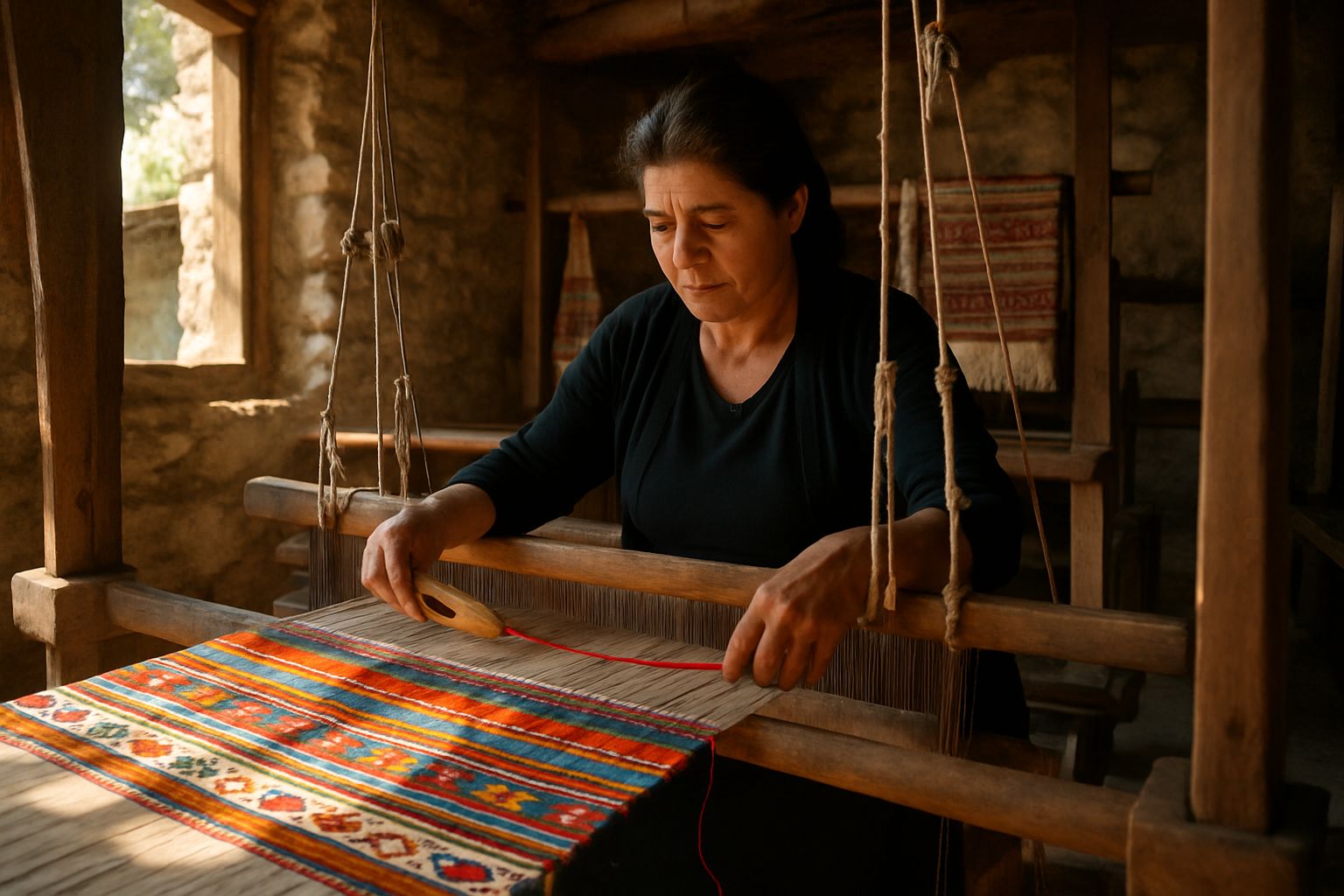
Nestled in the sun-drenched Mediterranean, Cyprus is a tapestry of rich cultural heritage and vibrant traditions. Among its many treasures, the island's traditional weaving villages stand out as remarkable custodians of age-old techniques. Here, time slows down and you find an enchanting blend of history and craftsmanship, woven together intricately in every thread.
The heart of the craft is Fyti, a stone-built village on a plateau about 25 km northeast of Paphos, at around 680 metres, with views down to Chrysochous Bay. Its cotton textiles, known as Fythkiotika, are woven on a foot-treadle floor loom called the voufa, which is why they are also known as 'ploumia tis voufas', embroideries of the loom. Up until 1970 the neighbouring villages of Lasa, Simou, Drymou, Polemi and others wove in the same style, but Fyti was the district's main weaving centre and gave the fabric its name. Lefkara, often mentioned in the same breath, is a different tradition: its famous lace is needlework stitched by hand on linen, not woven on a loom, and we cover it in our guide to Cyprus' lace villages.
Fythkiotika are among the oldest handicrafts on the island. The French historian Mas Latrie recorded weaving as particularly prosperous in the Middle Ages, mainly in the Lusignan period (1192 to 1489), and Elizabeth Lewis praised the handiwork of Fyti and the surrounding villages in her book A Lady's Impressions of Cyprus in 1893. The first pieces were woven in red and blue, the only colours the weavers could get hold of, with yellow, orange and green added later. The bold geometric motifs carry names from village life, such as Mavromatoudes (black-eyed girls), Tesserakarido (four walnuts) and 'the teacher's shoe'. Cotton was once gathered locally, cleared of its seeds on a hand gin called the apparos and spun into yarn before it reached the loom; today ready-made thread is used. In 2016 the craft was added to Cyprus' national inventory of intangible cultural heritage, kept by the Cyprus National Commission for UNESCO.
The easiest way to see the craft up close is the Fyti Weaving Museum, founded by Charalambos Mavrellis, which displays examples of the village's textiles and shows how they have been made since medieval times on the old-style loom. Entry is free. It opens Monday to Saturday, 08:00 to 12:00 and 14:00 to 17:00 from May to October, and 09:00 to 12:00 and 13:00 to 16:00 from November to April; Sunday visits can be arranged and it closes on public holidays, so ring +357 99 372966 before a special trip. The tradition lives on through the few remaining Fythkiotisses, the women of Fyti, and weavers trained by the Cyprus Handicraft Service, and the old patterns now also appear on scarves, handbags and bedcovers.
The best time of all to go is the Fythkiotika Festival on Saturday 3 and Sunday 4 October 2026, from 10:00 to 22:00 in the village square. Weavers work at the loom in front of visitors, there are demonstrations of zivania distilling and halloumi making, and stalls sell village food such as resi, loukoumades and palouzes, grape must thickened with flour. On any other day, Fyti rewards a slow wander past its stone houses and old stone fountains, ideally timed for sunset over the bay.
If you are considering a deeper connection with Cyprus, perhaps even contemplating a move, the traditional weaving villages offer an authentic glimpse into the island’s soul. Living in or near these communities means immersing yourself in a lifestyle that values tradition and community. Here, residents enjoy a slower pace of life, where every day is an opportunity to appreciate the beauty of simplicity and the richness of cultural inheritance.
For those eager to make Cyprus their home, understanding this cultural tapestry is essential. With its blend of European and Middle Eastern influences, Cyprus offers a unique lifestyle that appeals to many seeking sun, sea, and a sense of belonging. The island's weaving villages are just one facet of its diverse allure, providing a tangible link to its storied past and a vibrant present.
So, if you are inspired by the idea of living amidst Cyprus' cultural heritage, consider the weaving villages as more than a travel destination, they could be your new home. Embracing the rhythms of life in these communities can offer a fulfilling and enriching experience. If you're ready to explore this possibility further, our relocation help can guide you through the process, ensuring your transition is as seamless and rewarding as possible.
