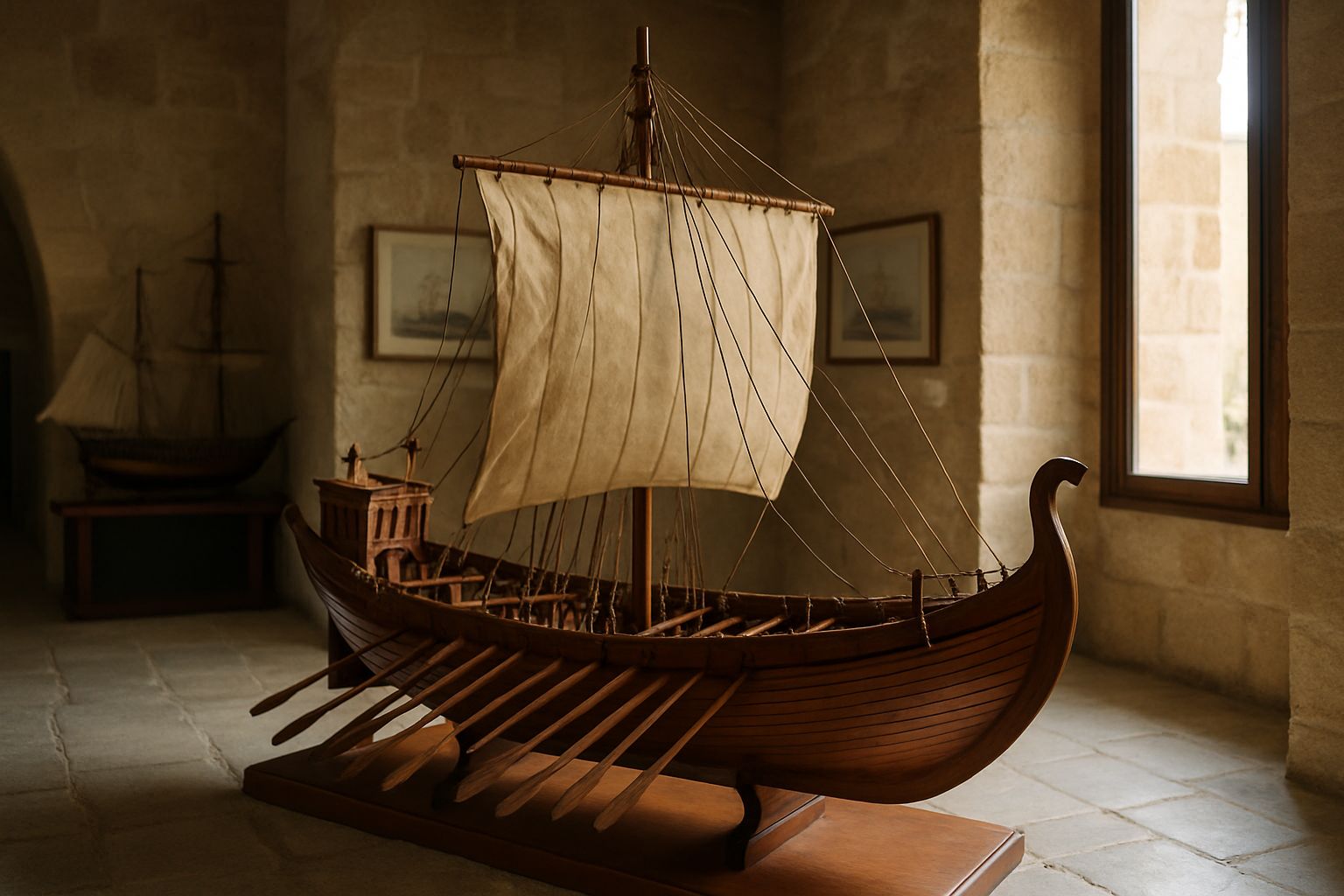
Cyprus, an island steeped in maritime history, offers a treasure trove of nautical heritage waiting to be explored. From ancient shipwrecks to tales of seafaring trade, the maritime museums of Cyprus provide a fascinating glimpse into the island's seafaring past. For those keen on tracing the waves of history, these museums offer not just exhibits but narratives that chart the journey from ancient mariners to modern sailors.
The original is the Kyrenia ship, on show in the Shipwreck Museum inside Kyrenia Castle. It is a Greek merchant ship that sank off Kyrenia around 300 BC, and a large part of its pine hull survived. Andreas Cariolou, a Kyrenia diving instructor and town councillor, found it in 1965, and a University of Pennsylvania Museum team led by Michael and Susan Katzev excavated it in 1968 and 1969. Its cargo tells a trade story of its own: most of its amphorae came from Rhodes, it carried thousands of almonds, and millstones for grinding grain were stacked in three rows along the middle of the ship as ballast. Kyrenia lies in the Turkish occupied north, so a visit means crossing at one of the official checkpoints with your passport or ID.
Without crossing anywhere, head to the Thalassa Municipal Museum of the Sea in Ayia Napa, which opened in August 2005 on Kryou Nerou Avenue. Its centrepiece is Kyrenia II, a full-size sailing replica of the Kyrenia ship, built in Piraeus as a scientific experiment and completed in 1985. The museum also shows the papyrella, a reconstructed papyrus-reed boat of the kind thought to have carried obsidian by sea around 9000 BC.
Around them, the museum traces the sea's place in Cypriot life from prehistoric times to the present. Its antiquities span some 7,000 years, from the Neolithic to Venetian rule, and its marine life collection runs from fish, turtles and a seal to corals, shells and fossils, some of them around 130 million years old.
The story is still being written underwater. Since 2007 the University of Cyprus maritime archaeology lab, MARELab, has been studying the Mazotos shipwreck with the Department of Antiquities: a late Classical merchant ship lying 45 metres down off Mazotos in the Larnaca district, loaded with amphorae from the Aegean island of Chios, most of them probably carrying wine. It is a research site rather than a visitor attraction, so the two museums are where to see this age of seafaring up close.
Thalassa opens Tuesday to Saturday 09:00 to 17:00 and Monday 09:00 to 13:00. On Sundays it is closed from October to May and open 15:00 to 19:00 from June to September. Tickets are €4 for adults and €1.50 for children, with reduced rates for students and groups (+357 23 816 366). Kyrenia Castle keeps its own hours and fees, so check them before you cross.
If you're considering a more permanent move to this historically rich island, Cyprus offers a wealth of opportunities to immerse yourself in its vibrant culture and stunning landscapes. The blend of ancient history and modern living makes it an ideal place for those seeking a unique expatriate experience. For more information on making the move, feel free to explore our relocation help services and start planning your new life in Cyprus.
